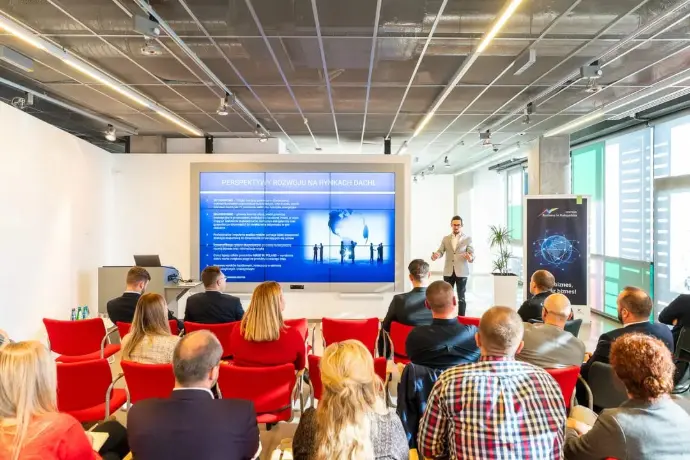
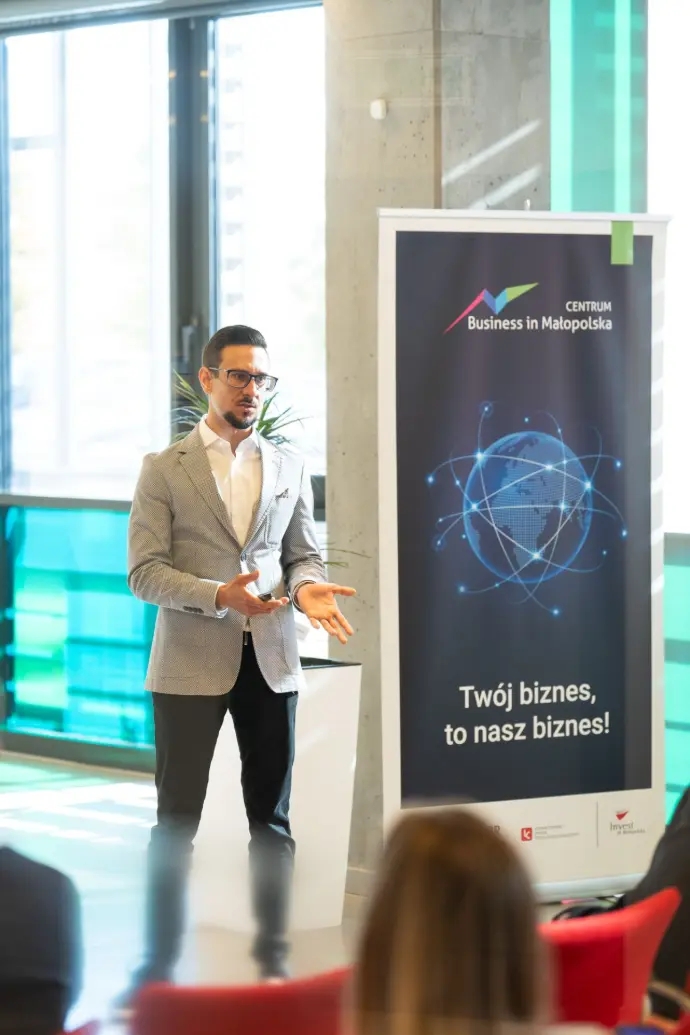
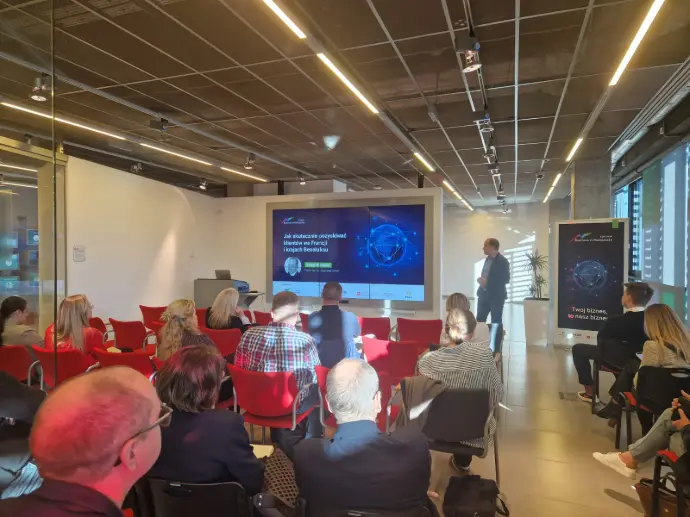
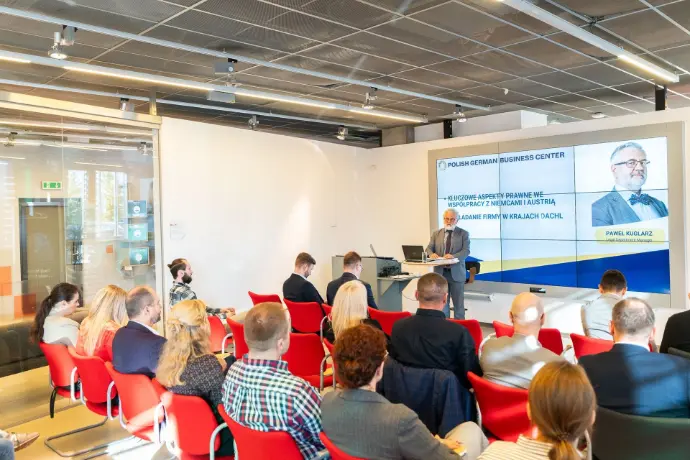
On November 05th, 2024, I had the pleasure of speaking remotely at the Business Development Conference in Krakow, Poland, representing G&E Sales. This event brought together Polish entrepreneurs, managers, and freelancers who are exploring international expansion opportunities, particularly in DACHL markets (Germany, Austria, Switzerland, and Liechtenstein), France, and Benelux countries.
Understanding the Polish Business Expansion Landscape
Poland's economy has transformed dramatically since joining the EU in 2004. With exports of goods and services accounting for 57.9% of GDP in 2023 (down from 62.4% in 2022), up from around 34% in 2004. Polish exports totaled EUR 353 billion in 2024, remaining stable compared to 2023 despite global economic challenges.
About the Business Development Conference
The conference was organized by our valued partner, Polish German Business Center, in collaboration with Krakowski Park Technologiczny (Krakow Technology Park) and Business in Małopolska. The organizers did an excellent job bringing together experts and entrepreneurs to discuss the key aspects of international business development.
The event focused specifically on helping Polish companies understand opportunities in Western European markets—particularly Germany, Austria, Switzerland, France, and the Benelux countries. These markets represent enormous potential for Polish businesses, but they also require careful strategic planning and local market knowledge.
My Presentation: Strategic Market Entry and Global Expansion
My session focused on strategic market entry in global markets, with special emphasis on opportunities in the UAE and what Polish companies need to consider when expanding internationally.
Why the UAE for Polish Companies?
The timing for discussing UAE opportunities couldn't be better. Poland-UAE trade turnover reached PLN 2.4 billion surplus on the Polish side in the first ten months of 2024 (PLN 3.47 billion exports and PLN 1.07 billion imports). Dubai's non-oil trade with Poland reached AED 7.2 billion ($1.96 billion) in 2024, showing 5% year-on-year growth.
More importantly, Poland has been recognized by UAE authorities as one of the 10 most important directions for economic cooperation for the next 50 years. The UAE views Poland as a strategic gateway to European markets, while Polish companies can use the UAE as their hub for expansion into the Middle East, Asia, and Africa.
Key Topics We Covered
International Market Trends: I shared insights about how global markets are evolving, particularly post-pandemic shifts in business operations, supply chain restructuring, and the growing importance of sustainability. Most Polish startups are focusing on European market expansion, with Germany and the UK being the most popular destinations, while 60% are targeting the US to attract international investors.
Market Entry Strategies: We discussed different approaches to entering foreign markets—from direct export to establishing local partnerships, setting up subsidiaries, or working through distributors. Each market requires a tailored approach. What works in Germany might not work in the UAE.
Client Acquisition Methods: Finding your first clients in a foreign market is often the biggest challenge. I shared practical strategies based on G&E Sales' experience in multiple markets, including networking through chambers of commerce, leveraging trade missions, digital marketing approaches, and the importance of building trust in new markets.
Legal Considerations: Every market has its own legal requirements, and understanding these is crucial. We discussed registration requirements, tax considerations, employment laws, and contract enforcement. In the UAE, for example, the new Regional Headquarters requirement means companies serious about government contracts need a local presence.
Financial and Institutional Support: Many Polish companies don't realize how much support is available for international expansion. We covered EU funding programs, export credit insurance, chambers of commerce support, and institutional partnerships that can make market entry easier and less risky.
The Growing Poland-UAE Relationship
One area that generated significant interest was the UAE market. Around 9,000 Polish citizens now live in the UAE, contributing to the Emirates' economy, and the number of Polish companies establishing presence there continues to grow.
Recent developments make this market even more attractive:
Infrastructure for Business: By the end of the second half of 2024, around 400 Polish companies were registered as active members of Dubai Chamber of Commerce, including 86 new businesses that joined in the first six months of the year. In February 2024, the Polish Business Council was established in Dubai, providing crucial support for Polish companies.
Strategic Cooperation: The first session of the Polish-UAE Strategic Financial Dialogue took place in Warsaw in July 2024, with representatives discussing AI, FinTech implementation, banking cooperation, and green transformation.
Investment Flows: In 2023, Emirati food company LULU completed investment in a logistics center in Olsztyn, while Emirati renewable energy company MASDAR announced investment in Poland for construction of photovoltaic and wind farms generating 1 GW of energy within 5-7 years.
Understanding DACHL Markets for Polish Businesses
While the UAE offers exciting opportunities, the core focus of the conference was on DACHL and Western European markets. Germany remains Poland's largest trading partner, with exports worth over EUR 98 billion in 2023, accounting for more than a quarter of total Polish exports.
However, expanding into these markets isn't as simple as it seems:
Cultural Differences: Even within German-speaking countries, business culture varies significantly. Swiss business practices differ from German ones, and Austrian companies have their own expectations.
Quality Standards: Western European markets demand high quality and consistent delivery. Building reputation takes time but losing it happens quickly.
Pricing Pressure: Polish companies often compete on price, but Polish competitiveness is shifting from "cheaper production" to "the ability to compete in areas requiring technology, innovation and environmental responsibility".
Language Barriers: While English works in many situations, knowing the local language creates significant advantages, especially in Switzerland and France.
The Interactive Discussion Format
What made this conference particularly valuable was the format. After each presentation, we had open discussions where attendees could ask questions and share their own experiences. This created a genuine knowledge-sharing environment where everyone learned from each other.
Some common questions that came up:
- "How do I find my first client in Germany?"
- "What are the biggest mistakes Polish companies make when entering Western markets?"
- "Is it better to work through a local partner or establish our own presence?"
- "How much money do we need to budget for market entry?"
- "What legal structure should we choose?"
These practical questions led to honest, valuable conversations about the real challenges of international expansion.
Key Insights for Polish Companies Considering International Expansion
Based on the conference discussions and G&E Sales' experience, here are the most important points Polish companies should consider:
Start with Market Research: Don't assume you understand a market just because it's in Europe. Each country has unique characteristics, customer expectations, and business practices. Invest time in understanding before investing money in market entry.
Leverage Existing Networks: Poland has strong institutional support for international expansion—Polish Investment and Trade Agency (PAIH), chambers of commerce, trade offices abroad. Use these resources. They exist to help you succeed.
Build Local Relationships: In most markets, having local partners or advisors significantly increases your chances of success. They understand nuances you'll miss and can open doors that would otherwise remain closed.
Be Patient: International expansion takes time. Companies that rush in, expecting quick results, usually fail. Those that take a methodical approach, build relationships, and invest in understanding the market typically succeed.
Focus on Value, Not Just Price: Polish companies have moved beyond competing solely on price. The "Made in Poland" brand is becoming a symbol of quality, credibility and added value. Highlight innovation, quality, and reliability.
Consider Emerging Markets: While Western European markets are attractive, don't overlook opportunities in the Middle East, Africa, and Asia. These markets often offer better margins and less competition.
Understand Financial Support: Multiple funding programs support international expansion—EU funds, export credit insurance, government programs. Understanding what's available can significantly reduce your financial risk.
The Role of G&E Sales in Supporting Polish Businesses
At G&E Sales, we specialize in helping companies enter new markets, particularly in the Middle East and Europe.
Our experience in multiple markets — from the UAE and Saudi Arabia to Germany and Romania, etc. —gives us unique insights into what works and what doesn't. We understand both the opportunities and challenges of international expansion because we've lived through them ourselves.
For Polish companies, we can offer:
- Market intelligence and entry strategy development
- Introduction to local partners and clients
- Support with legal and regulatory requirements
- Sales Process Optimization with AI
- Project management for international initiatives
- Digital Marketing activities
Looking Ahead: Opportunities for Polish Businesses
The outlook for Polish international expansion remains positive despite recent export slowdowns. Poland has emerged as one of Europe's standout investment destinations, blending economic growth, a skilled workforce, and investor-friendly policies.
Poland is indicated as a leading place for relocation activities within reshoring, nearshoring, and friendshoring frameworks, characterized by competitiveness, solid infrastructure, a large domestic market, openness to international workforce, and strategically advantageous geographical location.
The key is approaching international expansion strategically:
Diversify Markets: Don't rely solely on EU markets. The UAE, Saudi Arabia, and other Gulf countries offer significant opportunities, especially in construction, renewable energy, technology, and food sectors.
Innovate Continuously: Polish companies can gain advantages in Africa, Asia, and the Middle East thanks to innovation, green transformation, and flexibility in adapting to regulations.
Build Sustainable Models: International expansion isn't about quick wins. It's about building sustainable business models that generate long-term value.
Collaborate: Work with other Polish companies, share knowledge, support each other. The Polish business community abroad is growing stronger, and collaboration creates opportunities for everyone.
Final Thoughts
The Business Development Conference in Krakow was an excellent event that brought together entrepreneurs genuinely committed to international growth. The combination of expert presentations, practical discussions, and networking opportunities created real value for attendees.
Interested in expanding your business internationally? Want to explore opportunities in the UAE, DACHL markets, or other regions? Contact G&E Sales at info@geglobalsales.com — we're here to help Polish companies succeed globally.

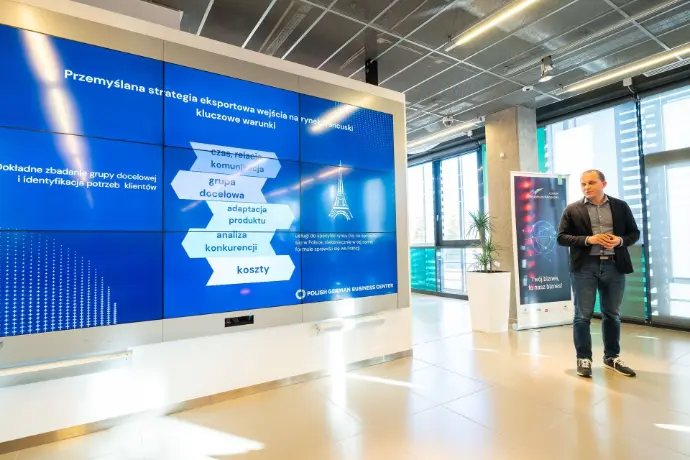

Speaking at the Business Development Conference in Krakow: Market Entry Strategies for Polish Companies