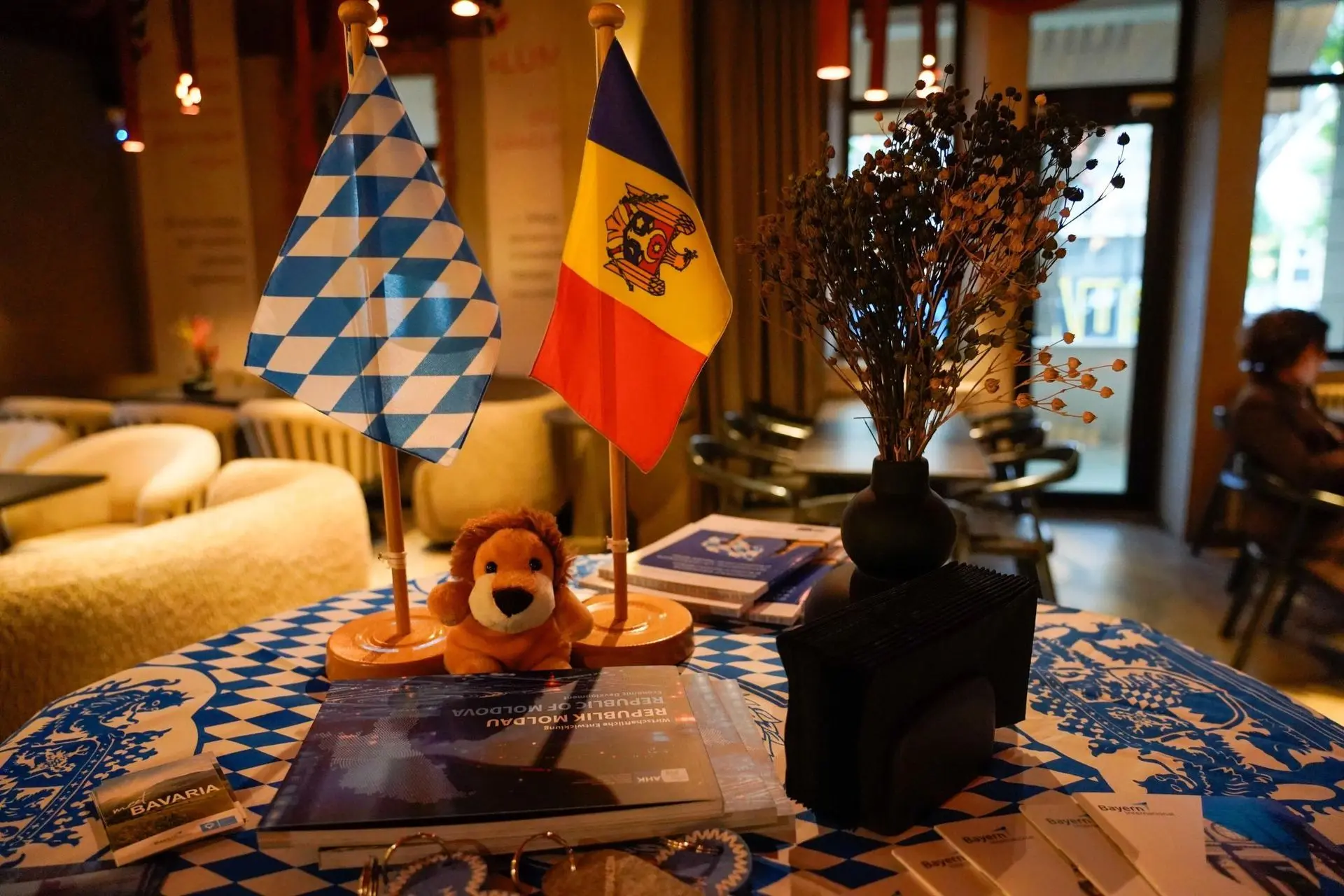
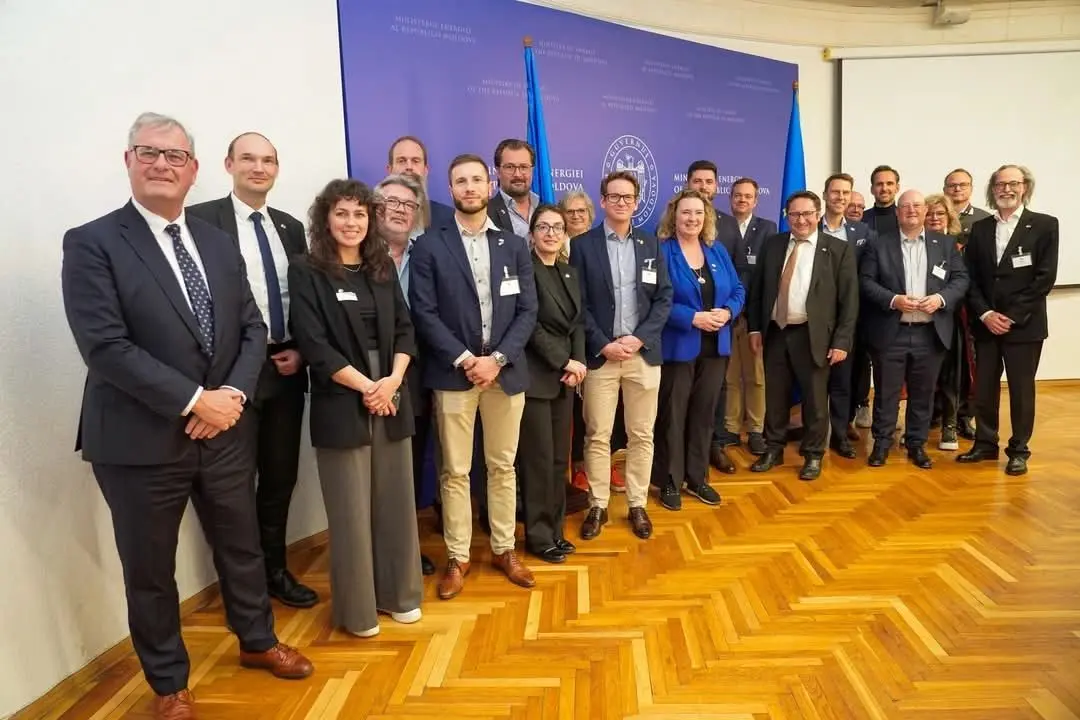
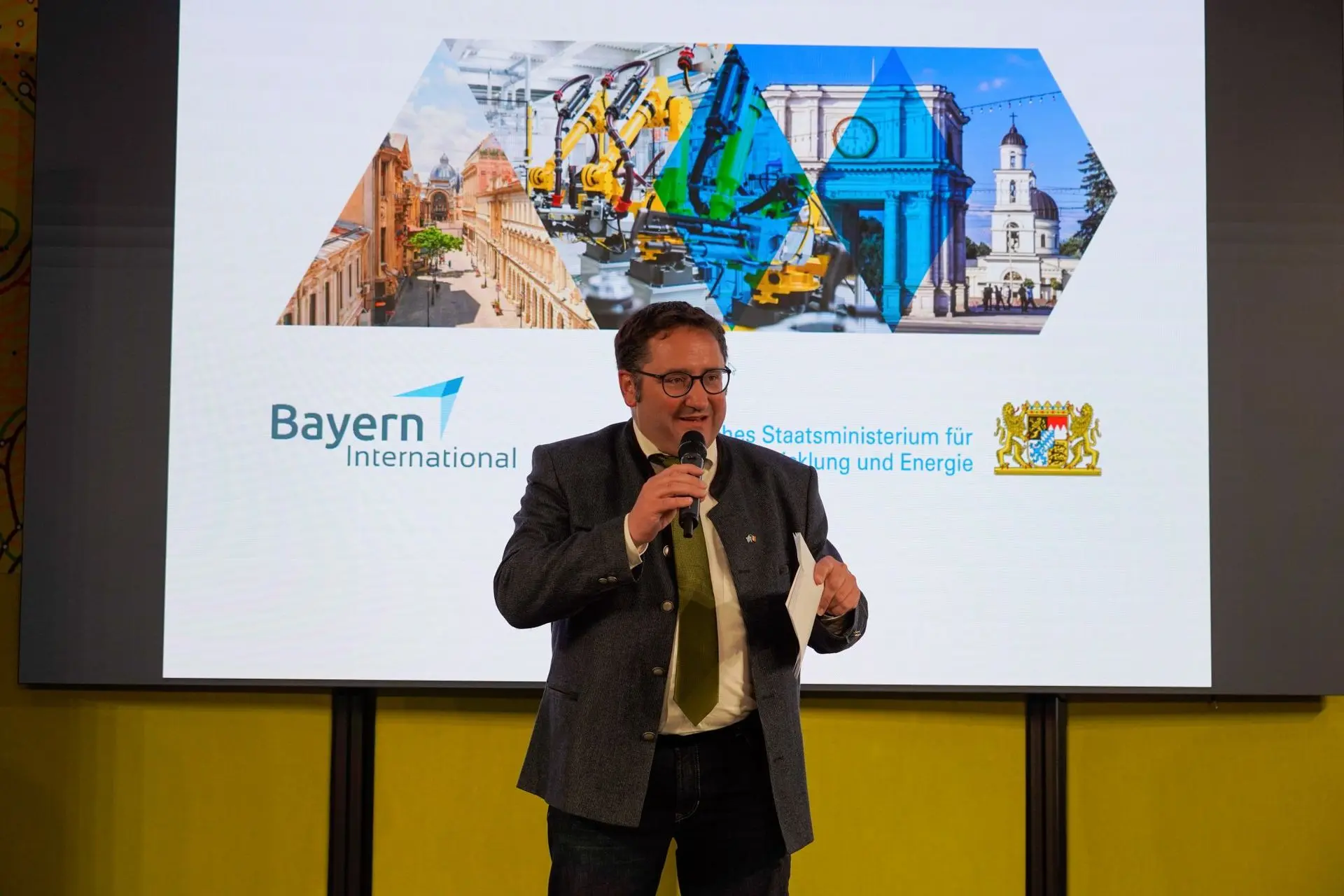
In May 2025, G&E Sales participated in a Bavarian business delegation led by State Secretary Tobias Gotthardt that took us through Bucharest and Iași in Romania, before crossing into Chișinău, Moldova. Organized by Bayern International and the Bayerisches Staatsministerium für Wirtschaft (Bavarian State Ministry for Economic Affairs), in collaboration with AHK Romania & Moldova, this multi-day trip provided invaluable insights into two emerging markets that are rapidly transforming into strategic hubs for European business expansion.
Day One: Bucharest - Setting the Foundation
On May 14th, 2025, our delegation gathered in Bucharest with a clear mission: deepen business and political ties between Bavaria and Romania (and soon, the Republic of Moldova), and for G&E Sales, introduce our partner Easy Automator's innovative robot-teaching solution to Romanian companies while finding new integration partners and customers.
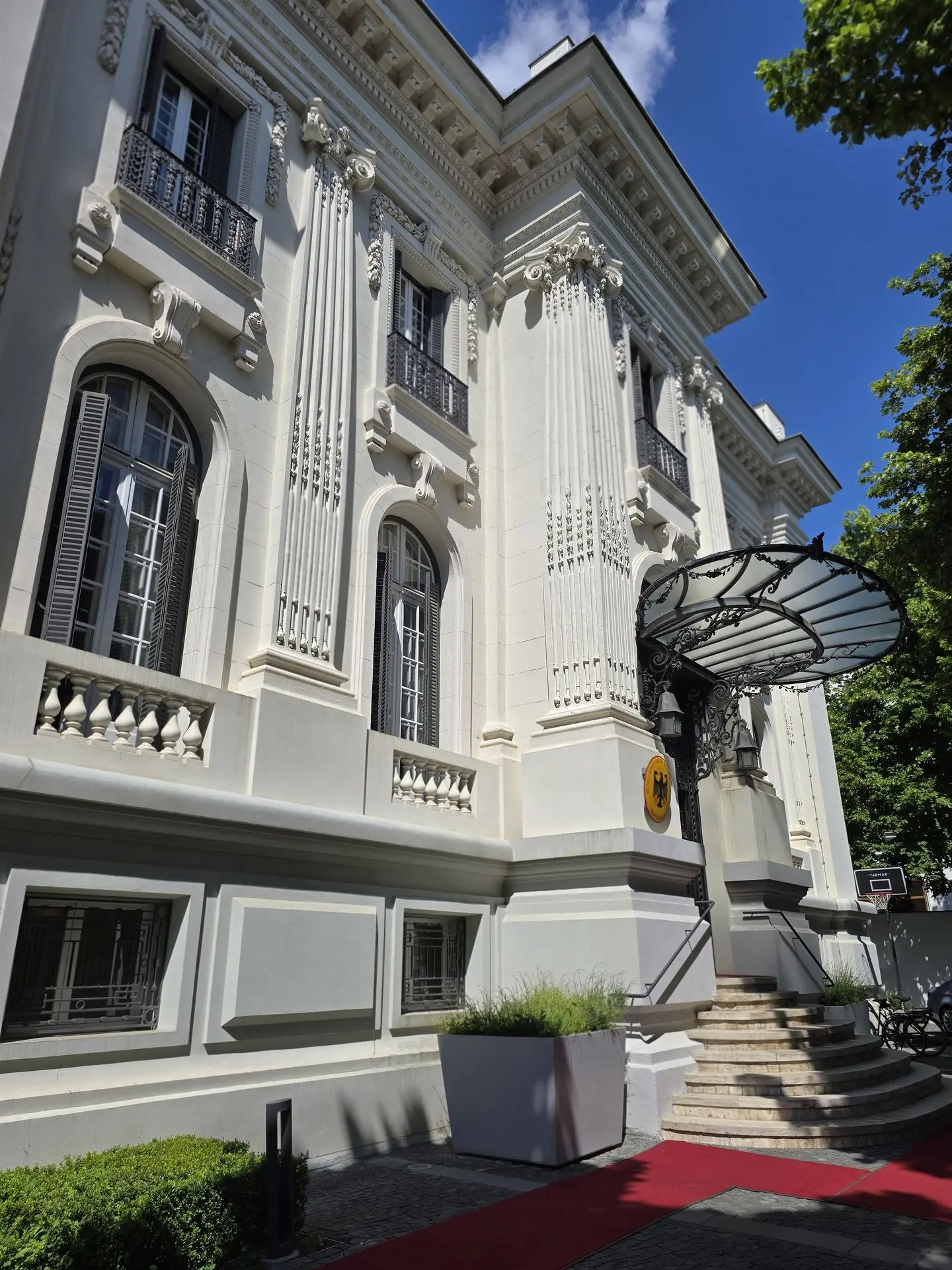
German Embassy Briefing: Understanding Romania's Landscape
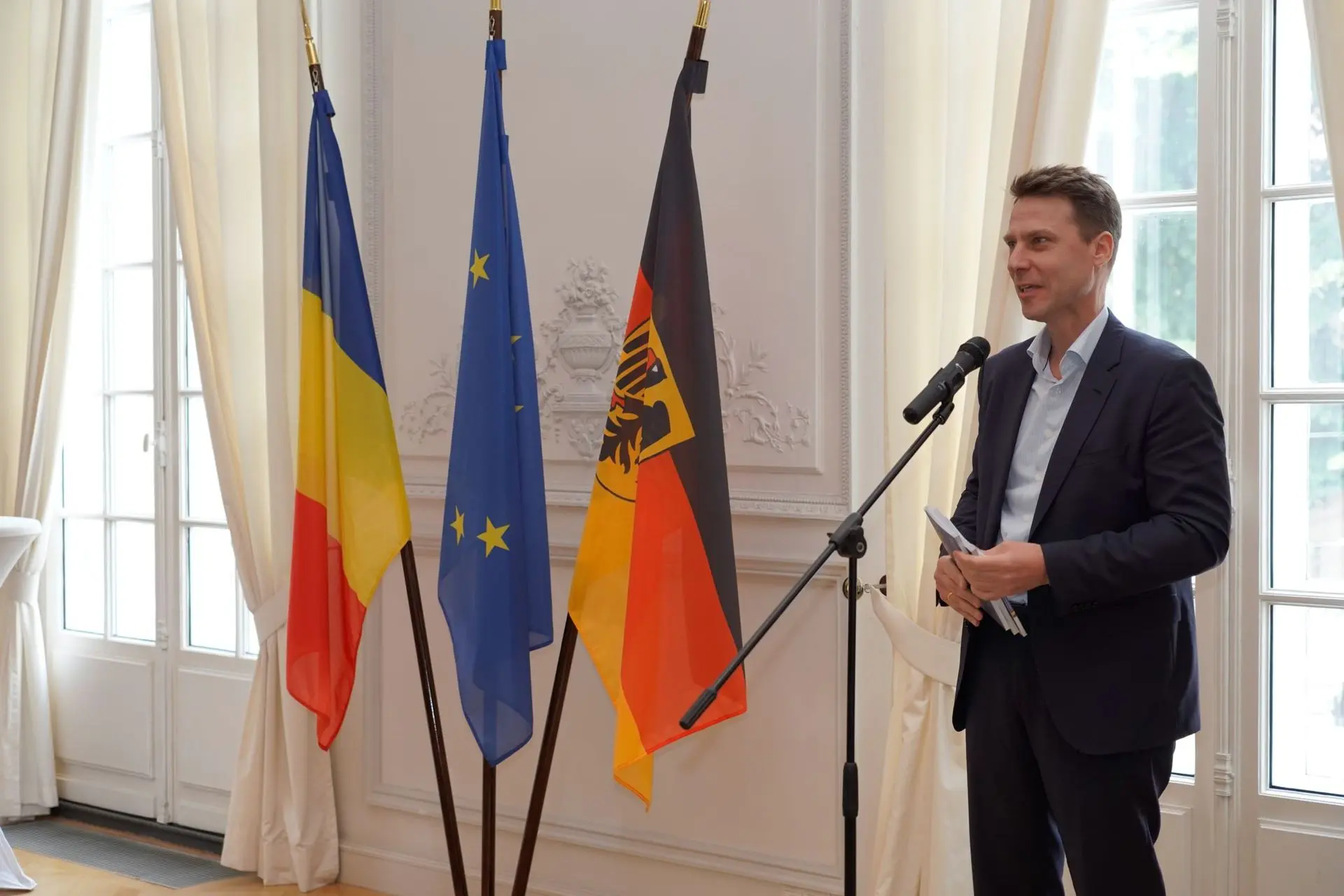
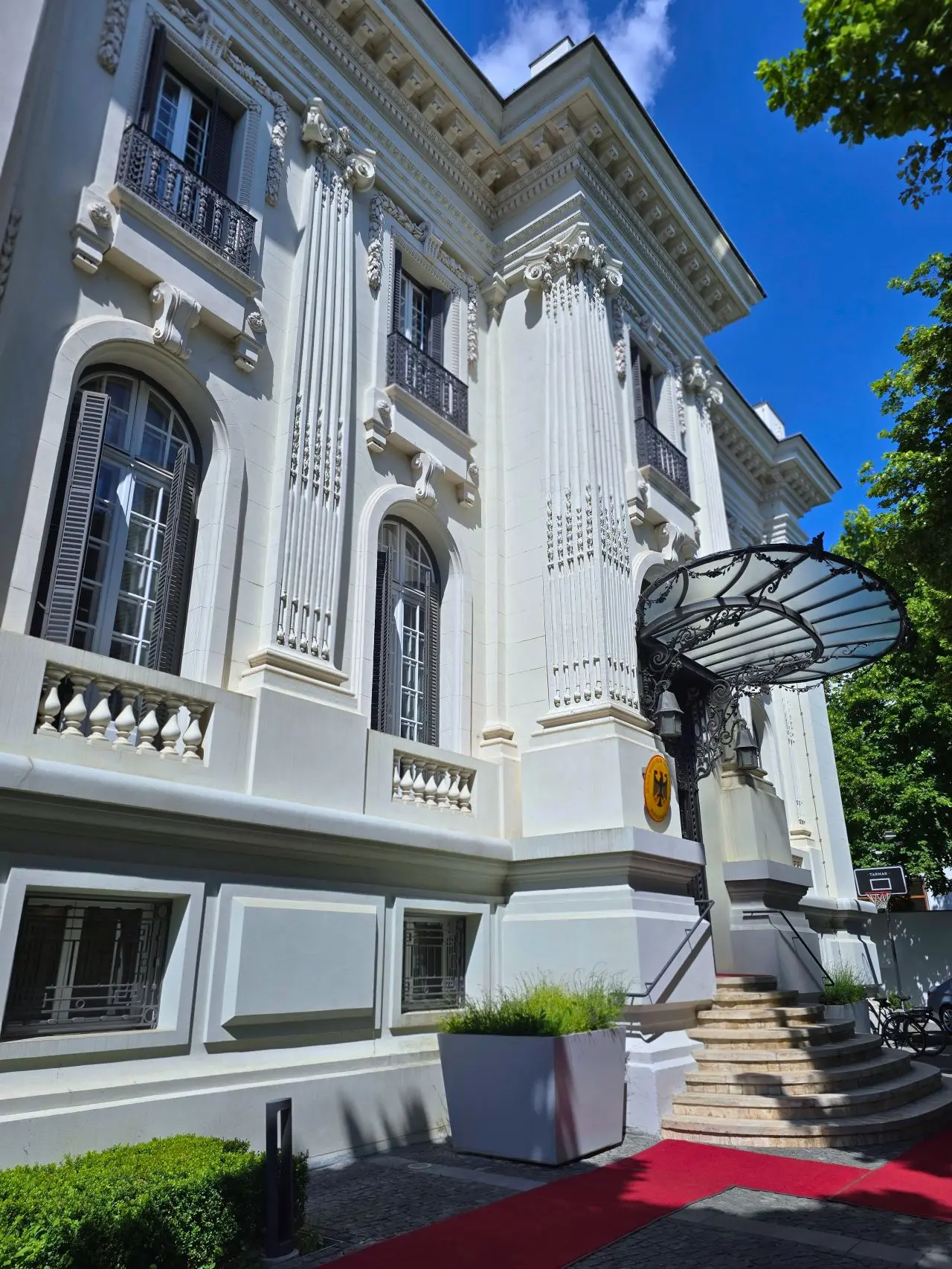
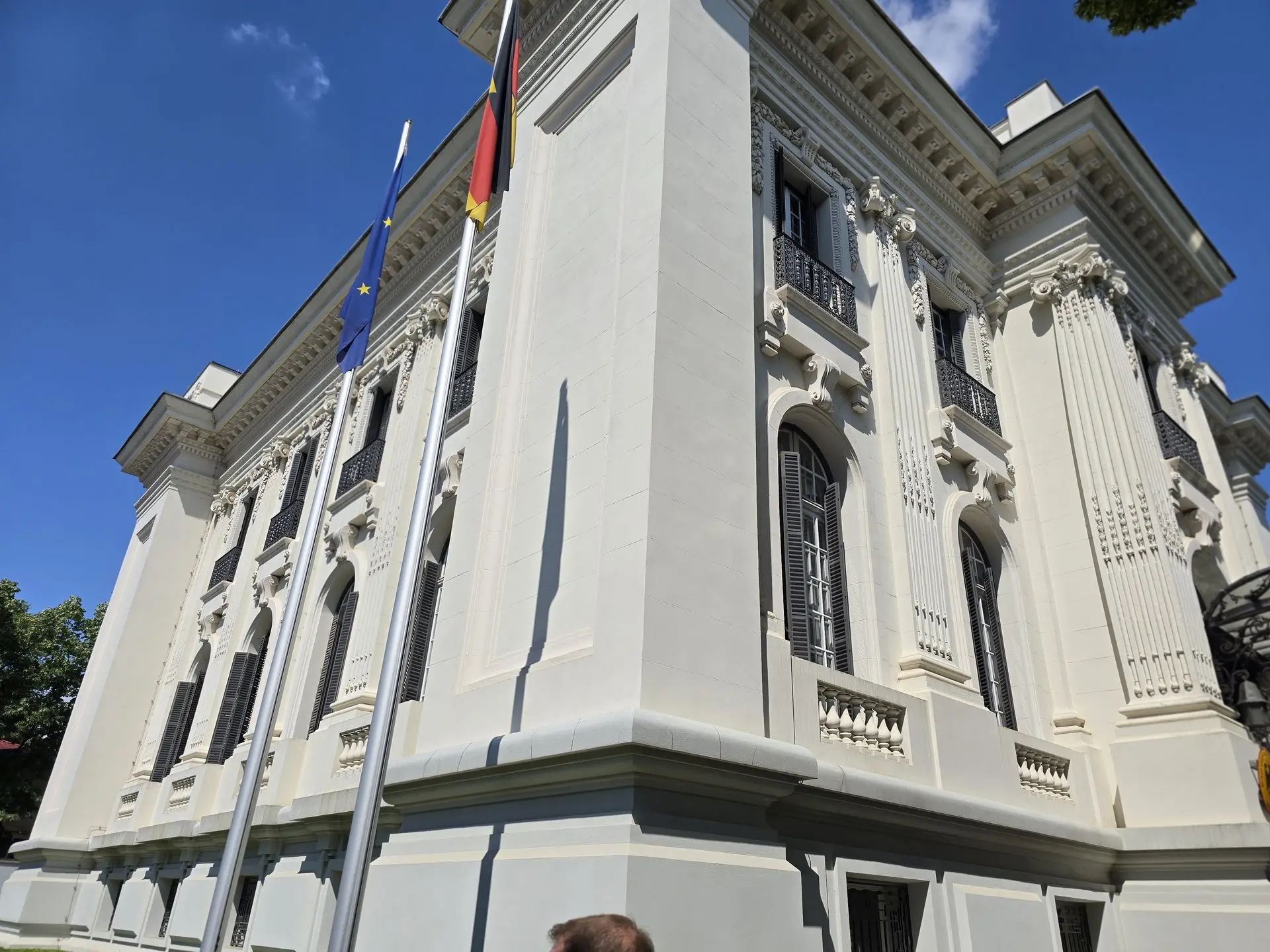
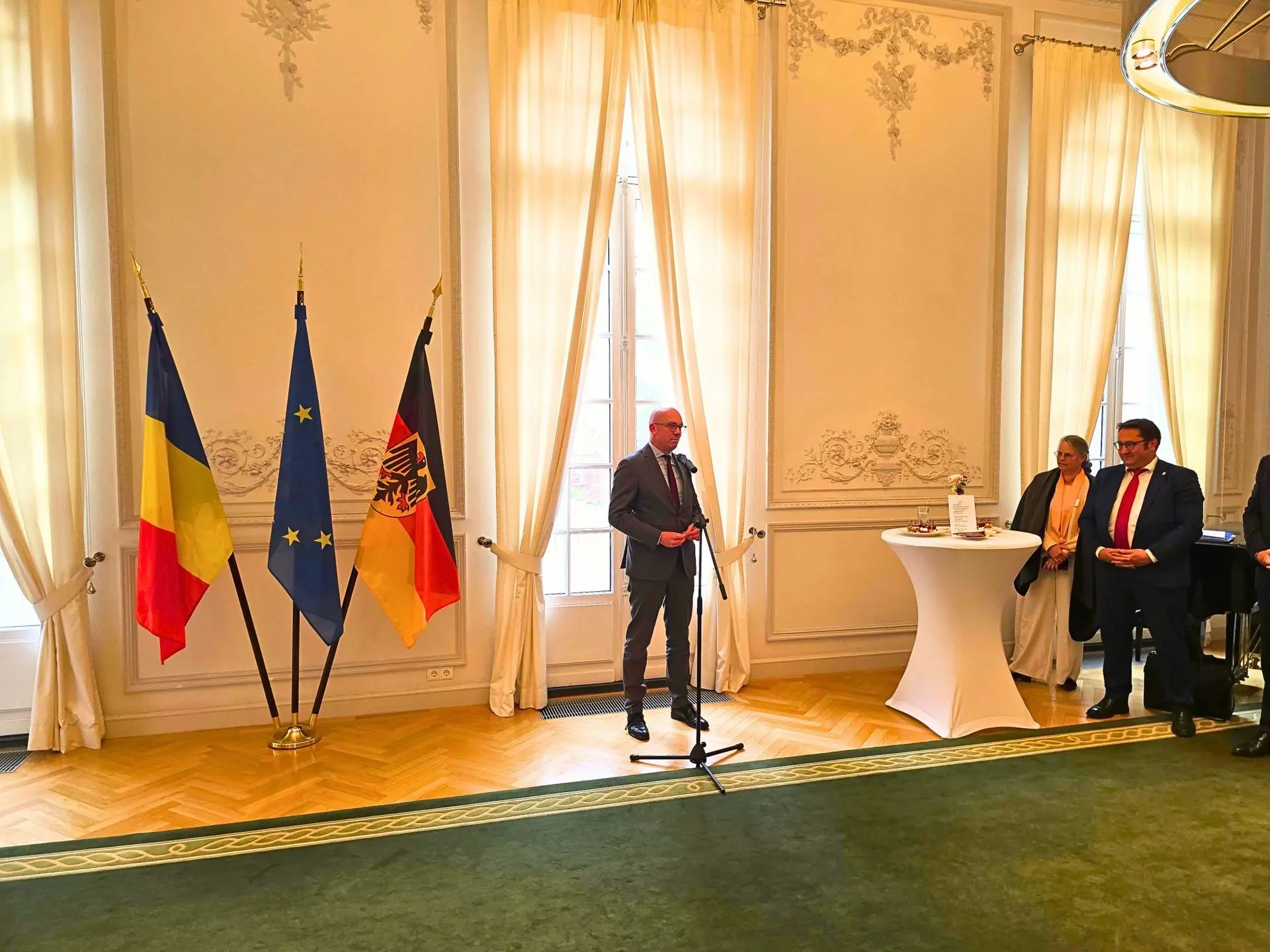
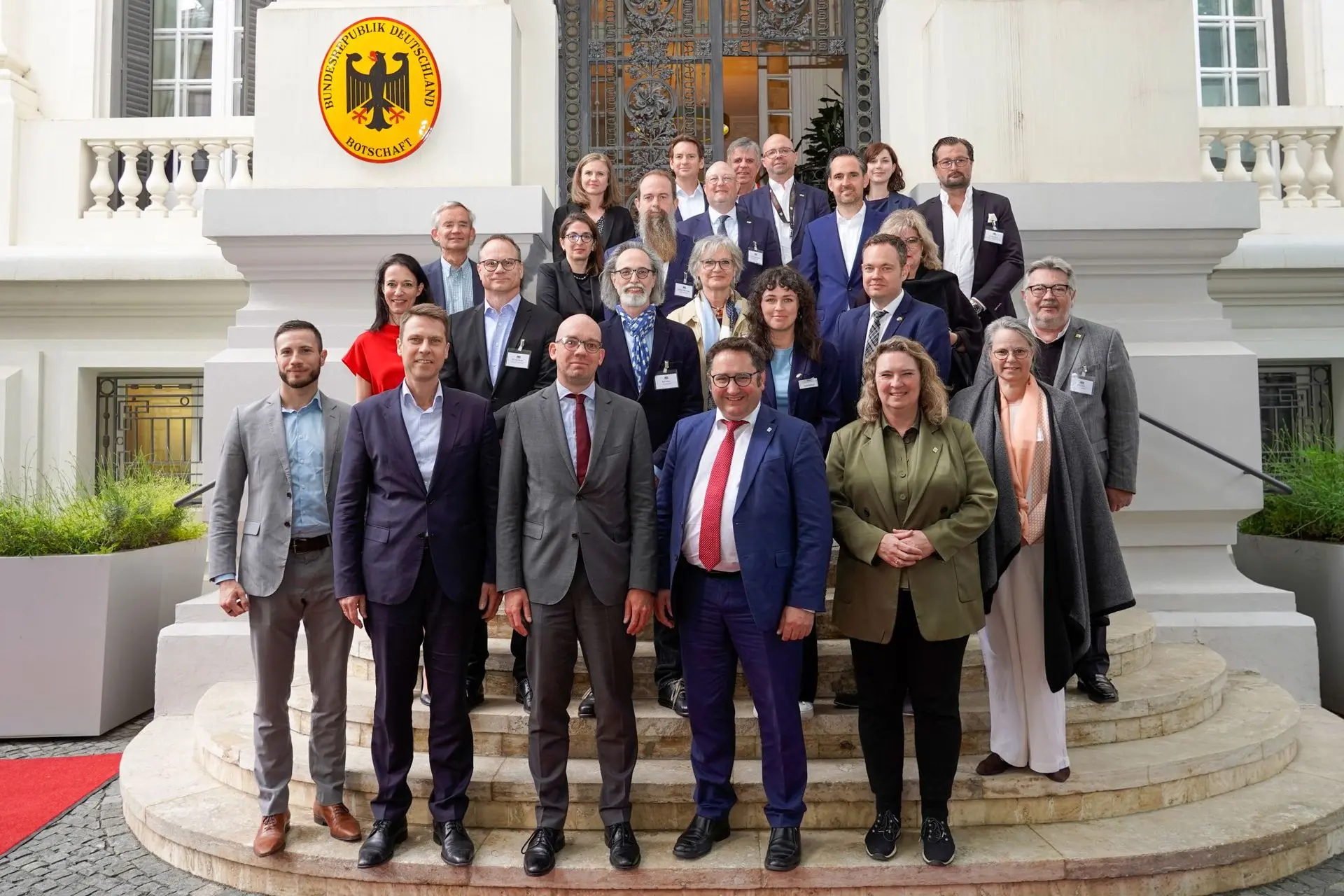
We started at the German Embassy in Bucharest, where Ambassador Christian Plate and Sebastian Metz, CEO of AHK Romania, provided a comprehensive briefing on Romania's current economic and political landscape, emphasizing the region's close ties with Bavaria.
State Secretary Tobias Gotthardt shared his insights on the importance of aligning Bavarian expertise with Romanian innovation to drive mutual growth. This wasn't just diplomatic talk—the State Secretary made it clear that Bavaria views Romania as a strategic partner for long-term economic cooperation.
AHK Networking: Connecting with Romanian Industry
After the briefing, the delegation split into two groups. The political team proceeded to the Ministry of Economy, while our business group headed to AHK headquarters for a focused networking event.
We engaged directly with Romanian companies specializing in Smart Industry, Digitalization, Automation, and Robotics. These weren't casual conversations—we discussed concrete partnerships for Easy Automator, G&E Sales' partner offering innovative robot-teaching solutions that make automation accessible to companies of all sizes.
The Romanian companies we met were sophisticated, technically knowledgeable, and genuinely interested in German technology partnerships. Many were already implementing Industry 4.0 solutions and looking for the next level of automation capabilities.
Evening Event: High-Level Commitment to Cooperation
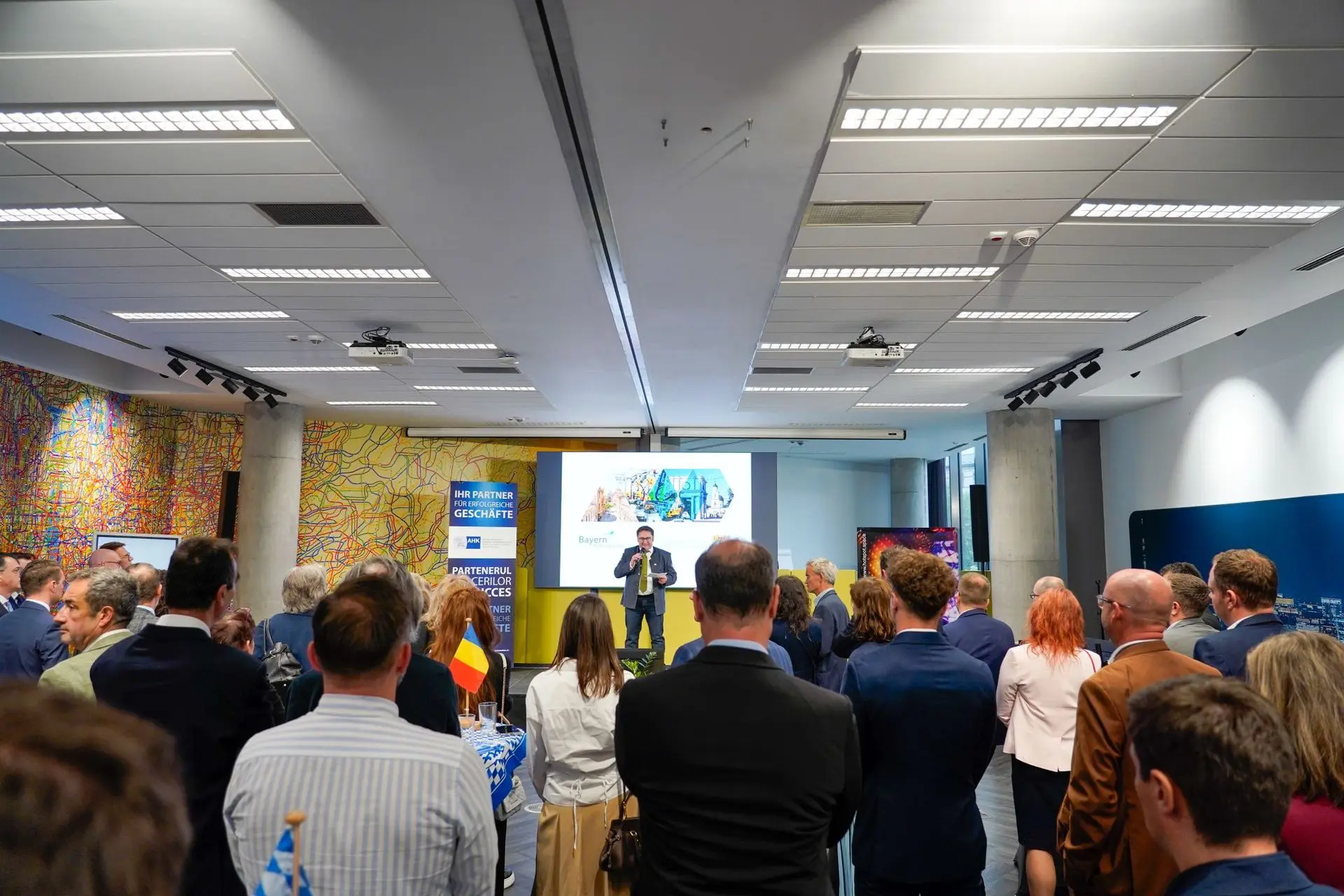
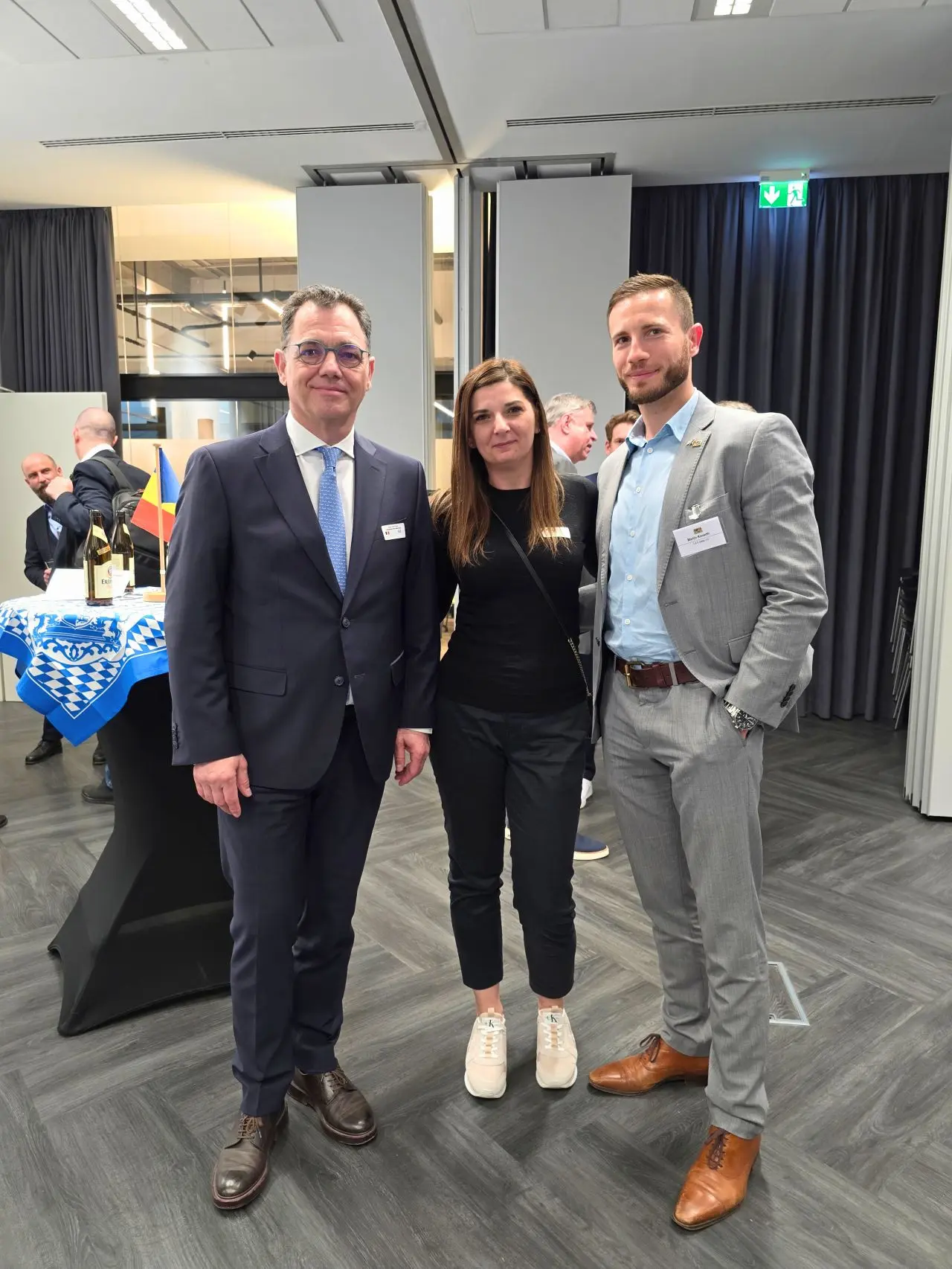
That evening's event at AHK brought together Bavarian and Romanian decision-makers in a setting that demonstrated the seriousness of this partnership.
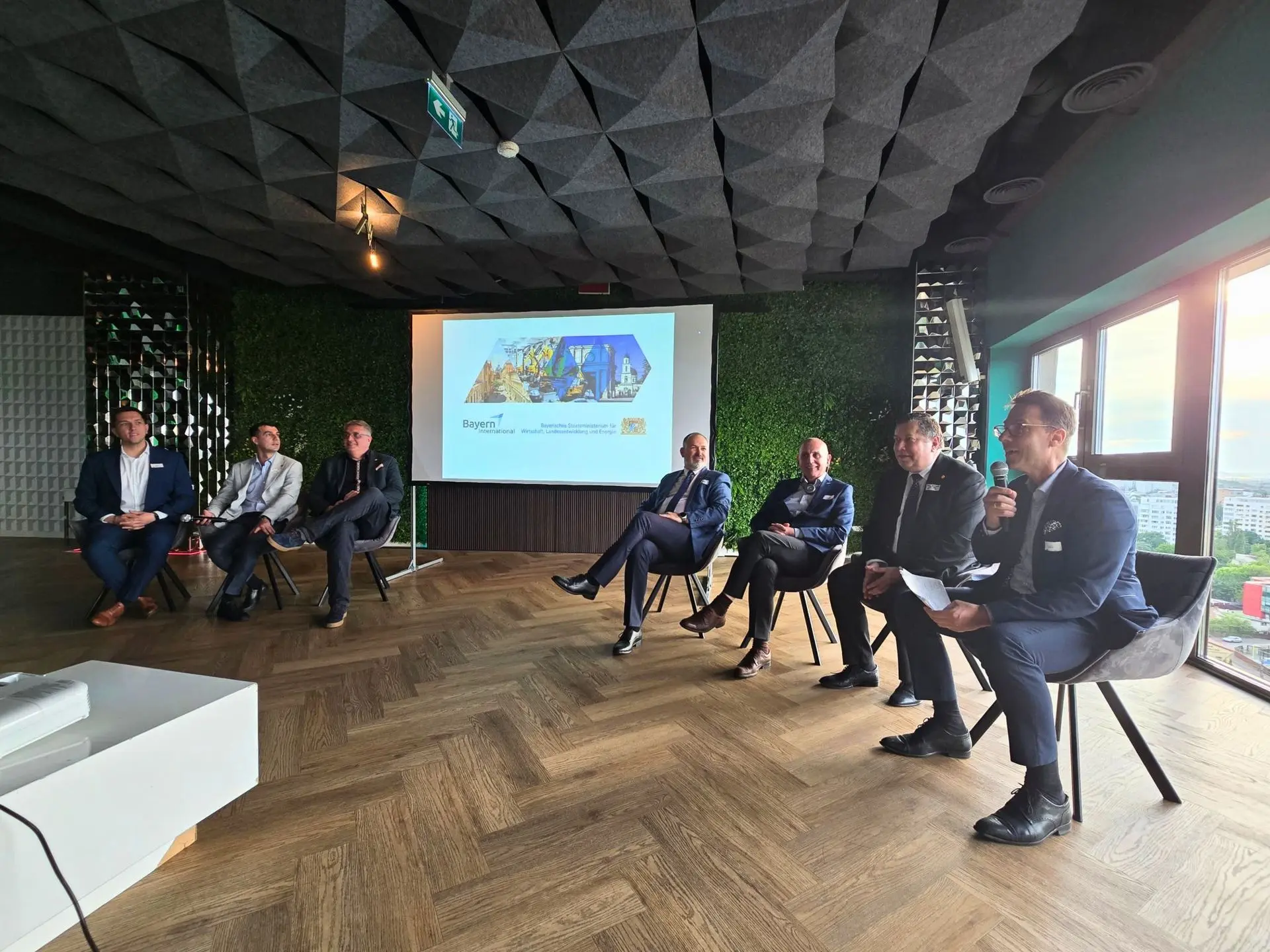
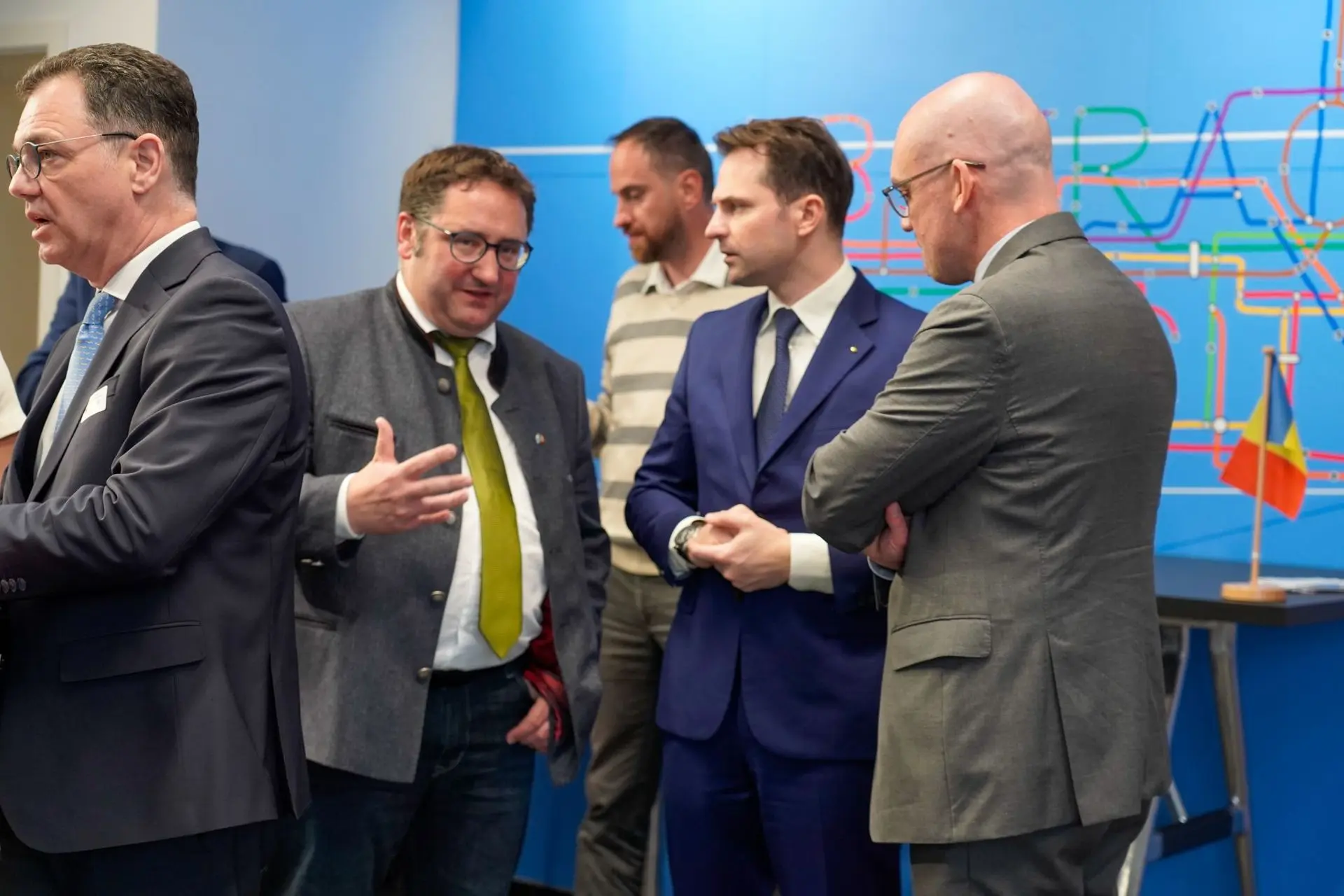
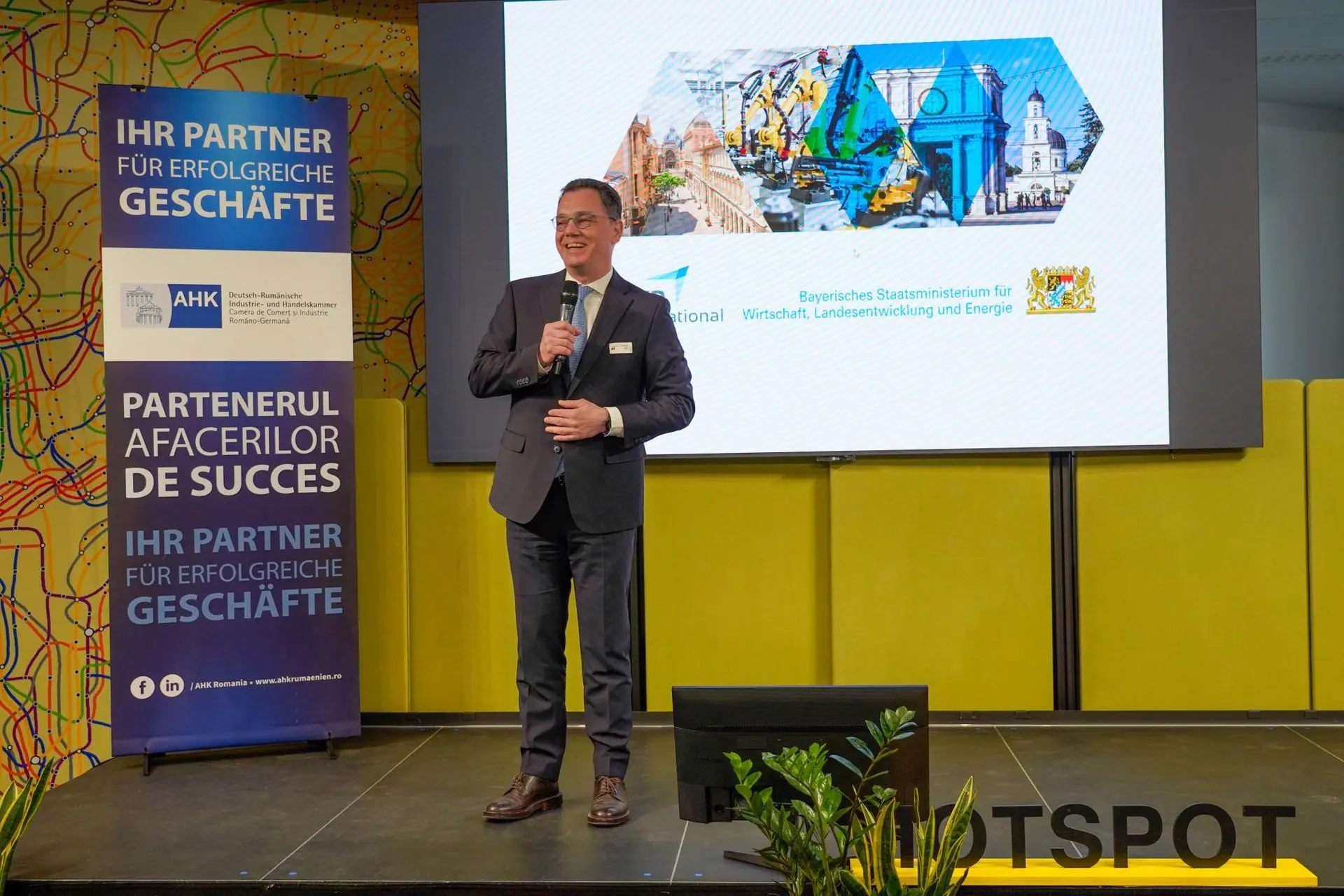
State Secretary Gotthardt, Sebastian Metz, Ștefan-Radu Oprea (Head of the Prime Minister's Chancellery), and Energy Minister Sebastian Burduja each delivered speeches emphasizing the strategic importance of closer collaboration in energy, manufacturing, and other industries between Bavaria and Romania.
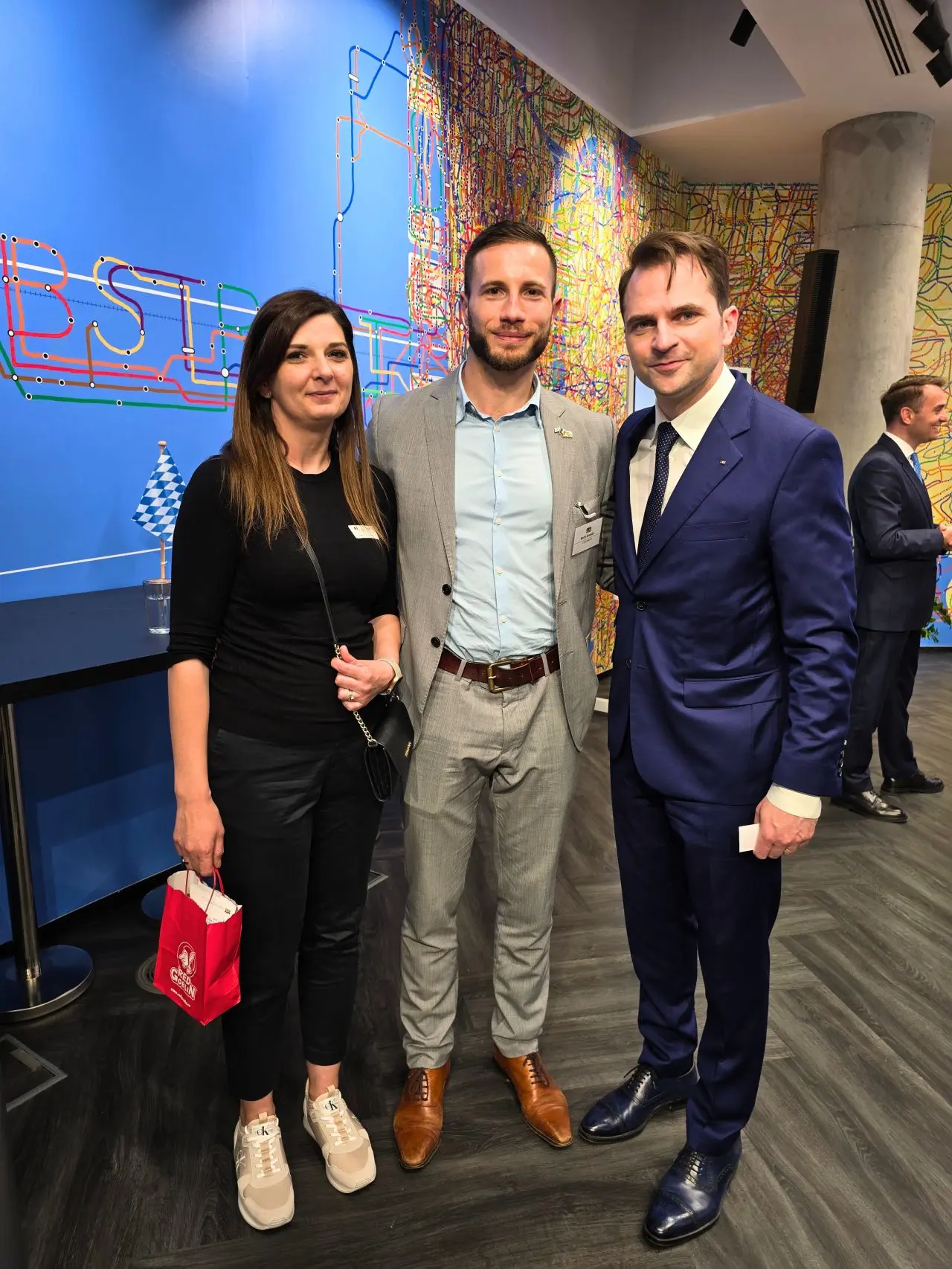
I was honored to discuss directly with Mr. Oprea and Minister Burduja. We had substantive conversations about opportunities in sustainable construction, renewable energy, and the potential for German-Romanian partnerships in these sectors.
My thanks also go to Anca Vesa from TechnoWorks for joining the event and enriching the discussions with her expertise in technology and innovation.
Day Two: Impact Hub and Infineon Technologies
The following morning began with a visit to Impact Hub Bucharest, where Oana welcomed us and shared deep insights into Romania's startup ecosystem.
Understanding Romania's Startup Scene
Oana explained what drives local entrepreneurs, the challenges they face in scaling their businesses, and how Impact Hub supports their journey from idea to growth stage. Romania's startup ecosystem is vibrant but faces familiar challenges: access to capital, mentorship, international connections, and navigating regulations.
What stood out was the quality of entrepreneurship. Romanian founders are building technology-first companies with global ambitions, not just local service businesses.
Infineon Technologies: Romanian Engineering Excellence
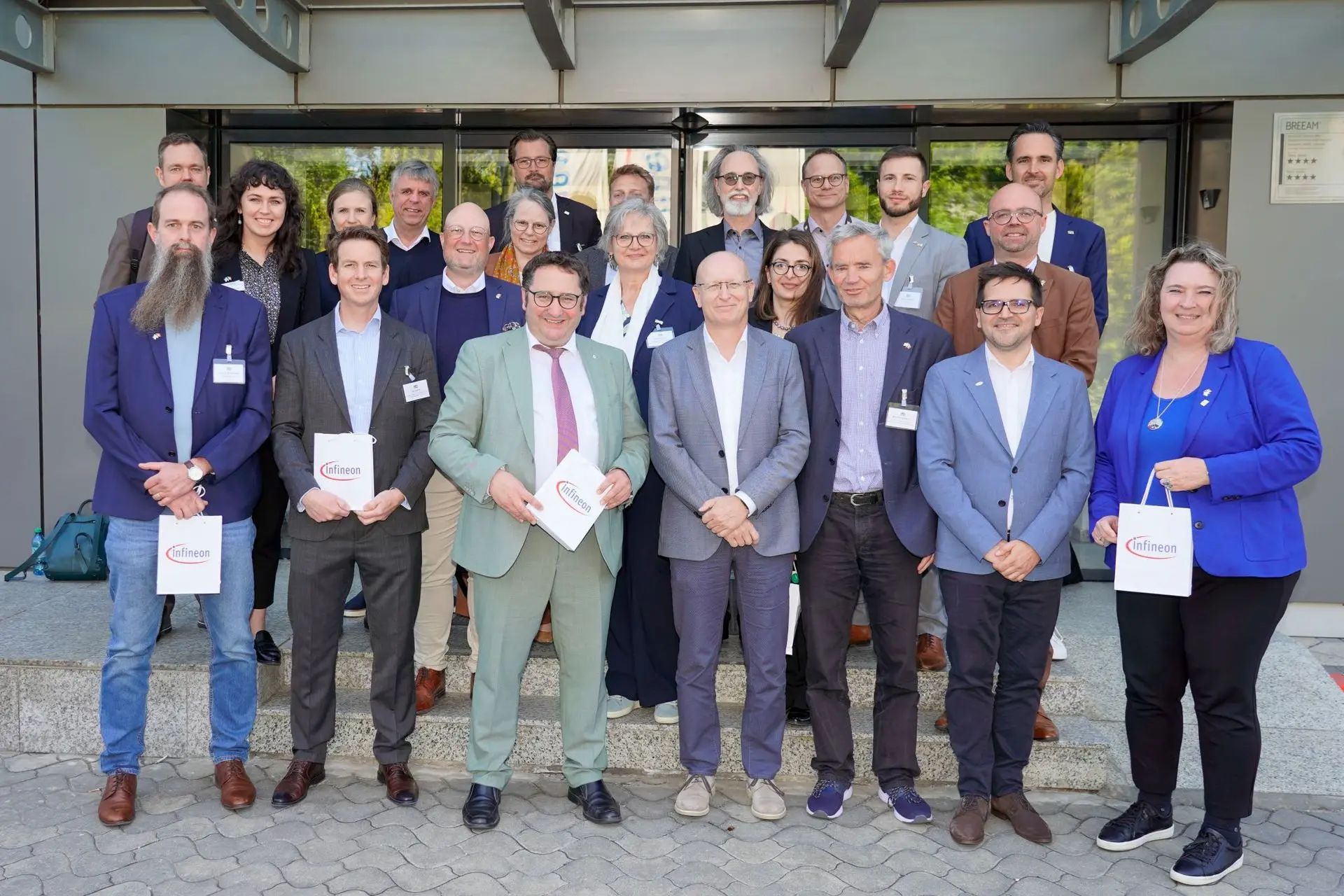
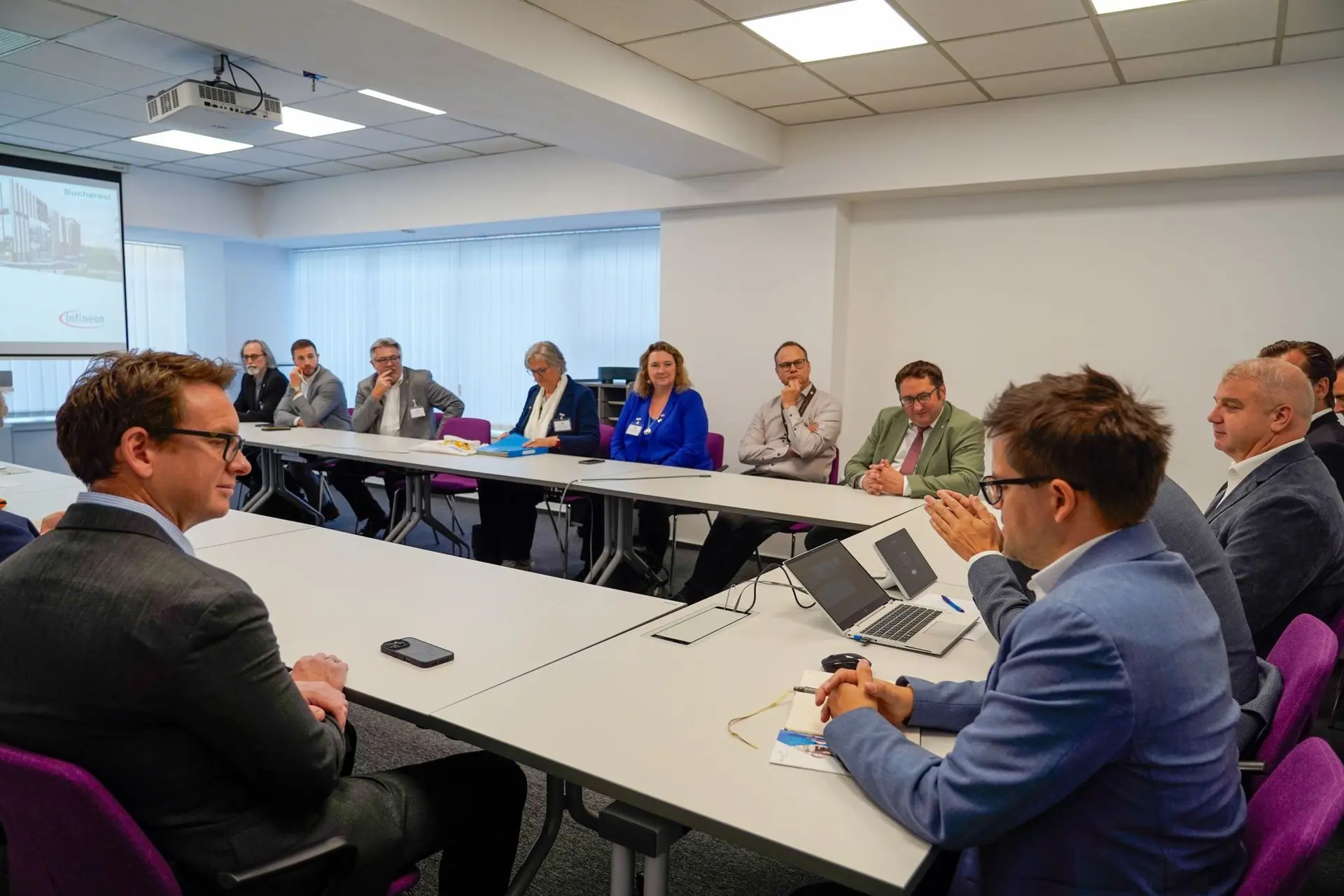
Our visit to Infineon Technologies Romania's R&D center was a highlight that demonstrated the sophistication of Romanian engineering capabilities. Infineon in Romania operates R&D centers focused on the development of semiconductor products for automotive, digital security, industrial and IoT applications, with over 500 engineers in Romania.
The facility focuses heavily on automotive safety systems, particularly airbag control unit systems. Witnessing their labs and meeting their engineers highlighted the strength of Romanian expertise in advanced manufacturing and semiconductor design.
Infineon Technologies Romania was founded in April 2005 and is the biggest R&D center for integrated circuits in Romania, developing not just products but also design methodologies and support for the IC design ecosystem.
Day Two Afternoon: Journey to Iași
After lunch, we flew to Iași, a city known for its strong IT sector and excellent universities. Iași isn't as internationally famous as Bucharest, Cluj, or Timișoara, but it's emerging as a significant technology and innovation hub in Eastern Romania.
Digitalization & Industry 4.0 Forum
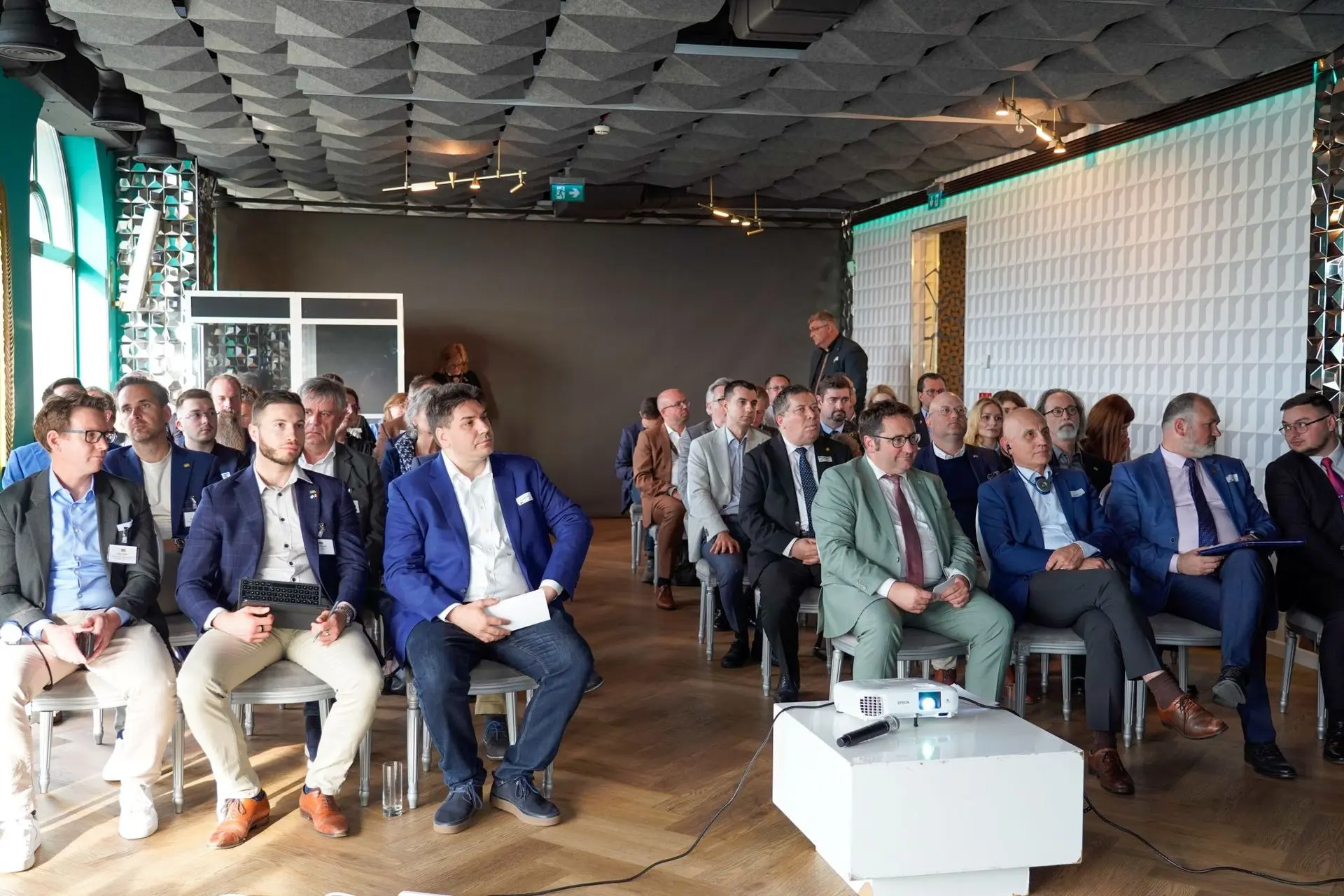
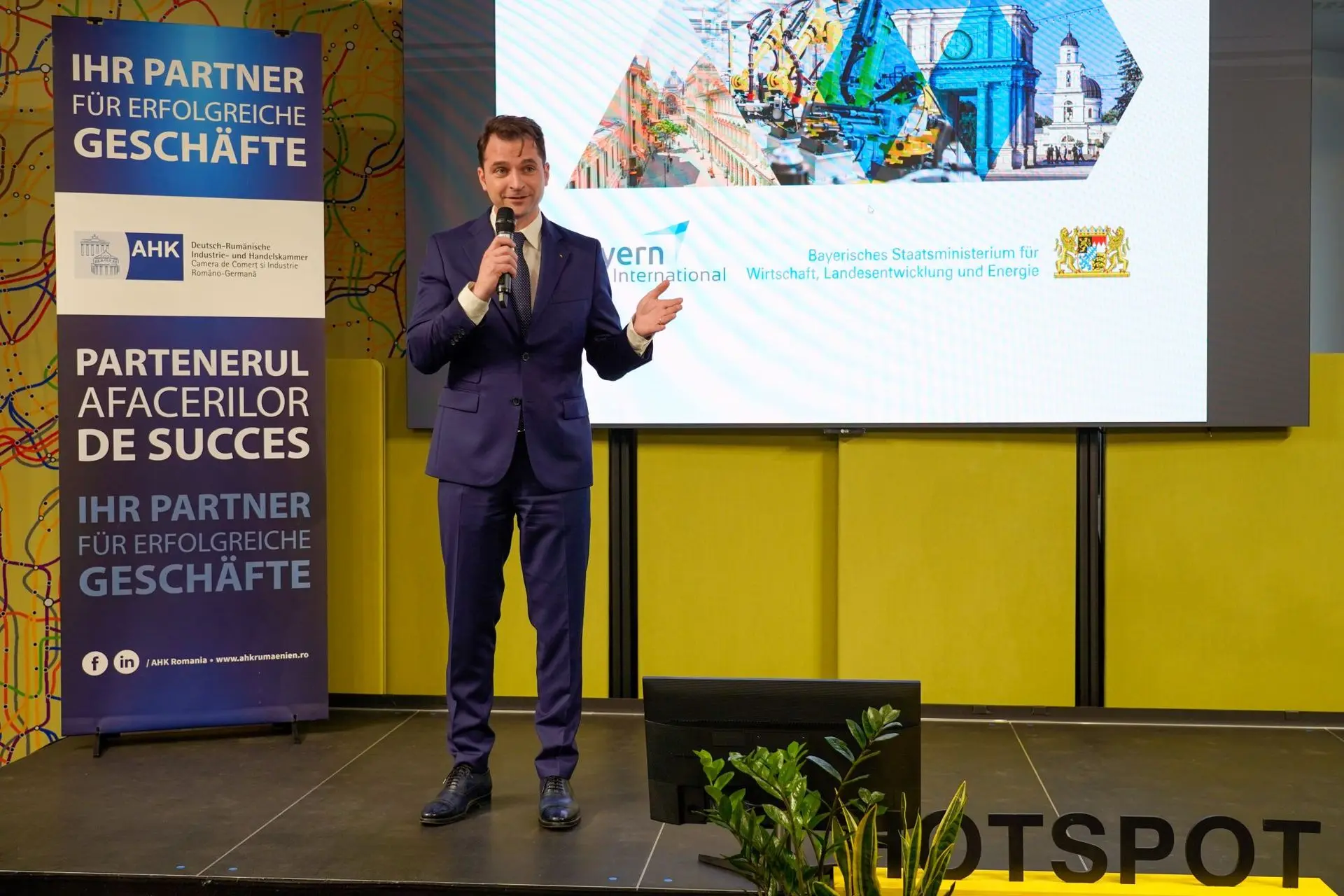
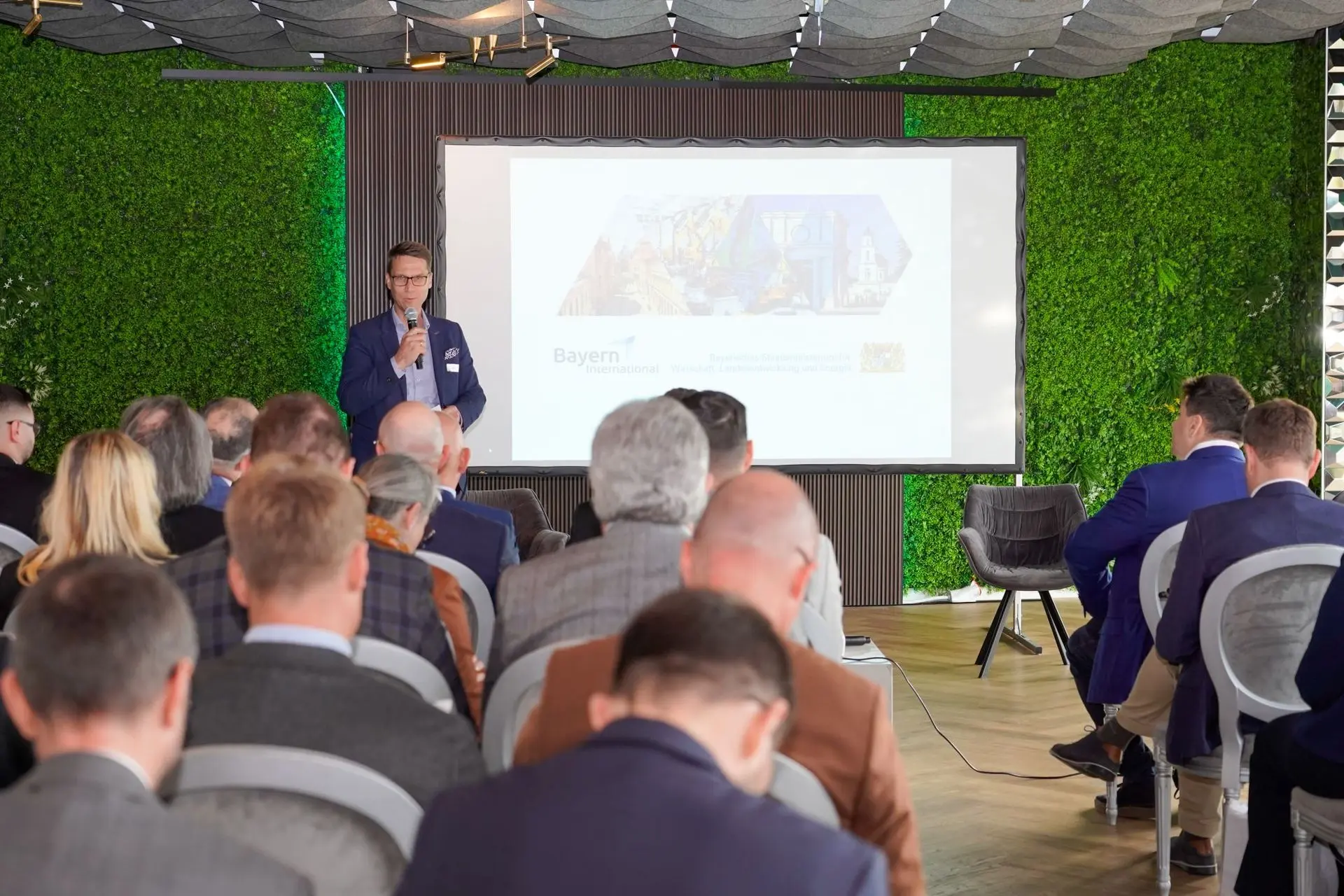
That evening, we participated in a Digitalization & Industry 4.0 forum that brought together regional leaders and business representatives. The event opened with remarks from Mr. Metz and State Secretary Gotthardt, followed by inspiring speeches from:
- Costel Alexe (President of Iași County)
- Mayor Mihai Chirica (Mayor of Iași)
- Vasile Asandei (Nord-East Development Agency)
- Dan Zaharia (Fab Lab Iași)
Each speaker presented perspectives on Iași region's market potential and competitive advantages. What became clear was that Iași isn't trying to copy Bucharest or Cluj—it's building its own identity as a digital and industrial transformation hub with specific strengths in IT, engineering education, and advanced manufacturing.
Panel Discussion: Iași's Competitive Edge
A panel discussion moderated by Mr. Metz brought together Alexe, Chirica, Asandei, Zaharia, and Dorin Cristea to explore Iași's competitive advantages. The discussion covered:
- Education infrastructure: Iași's universities produce thousands of engineering and IT graduates annually
- Cost competitiveness: Lower costs than Bucharest while maintaining quality
- Quality of life: Iași offers good living standards at affordable prices, helping companies attract and retain talent
- Government support: Local and regional authorities actively support business development
- Digital infrastructure: Modern connectivity and technology infrastructure
The panel wasn't just promotional—they honestly discussed challenges like emigration of talented graduates, need for more local entrepreneurship, and competition from other Romanian cities.
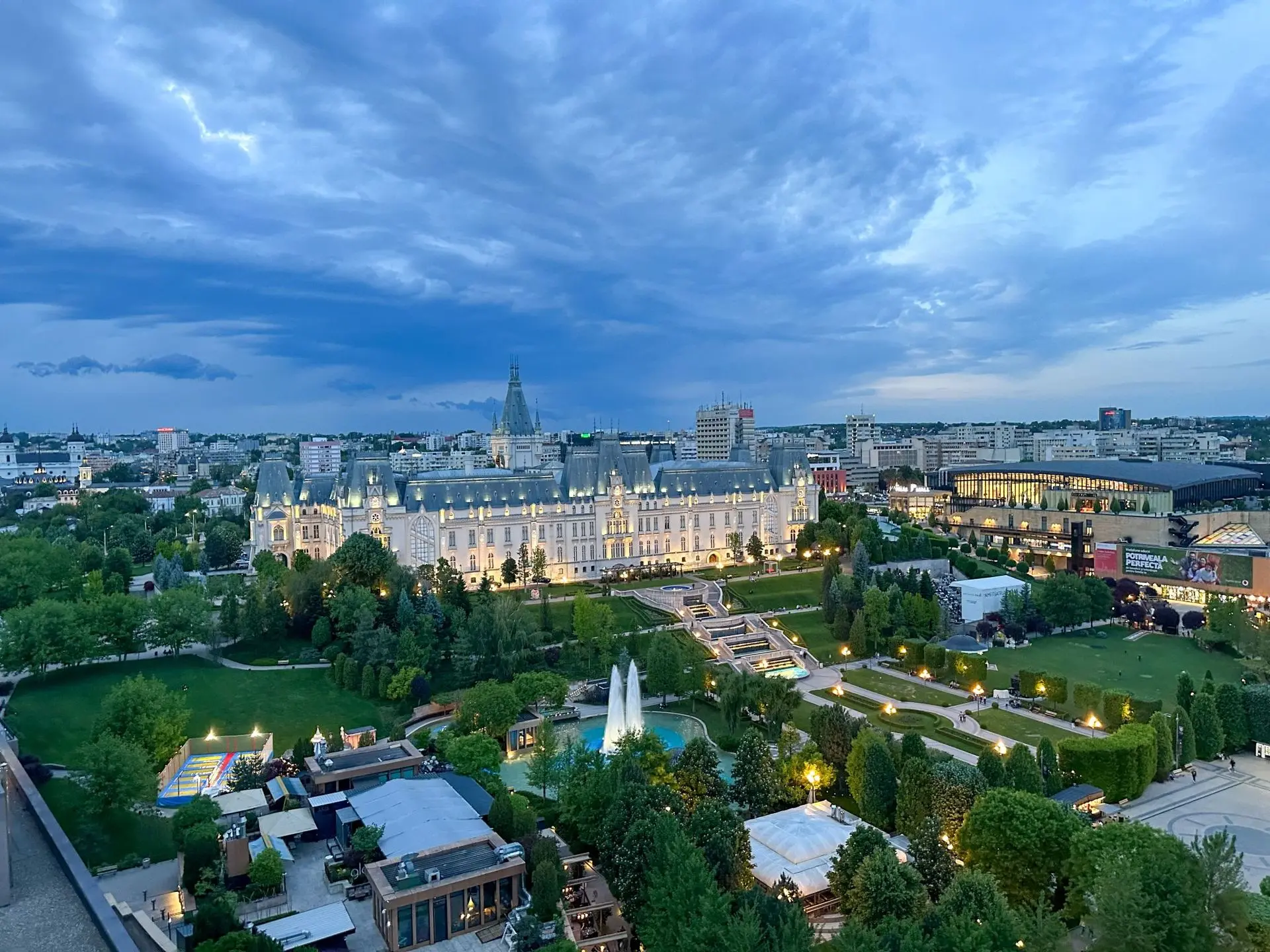
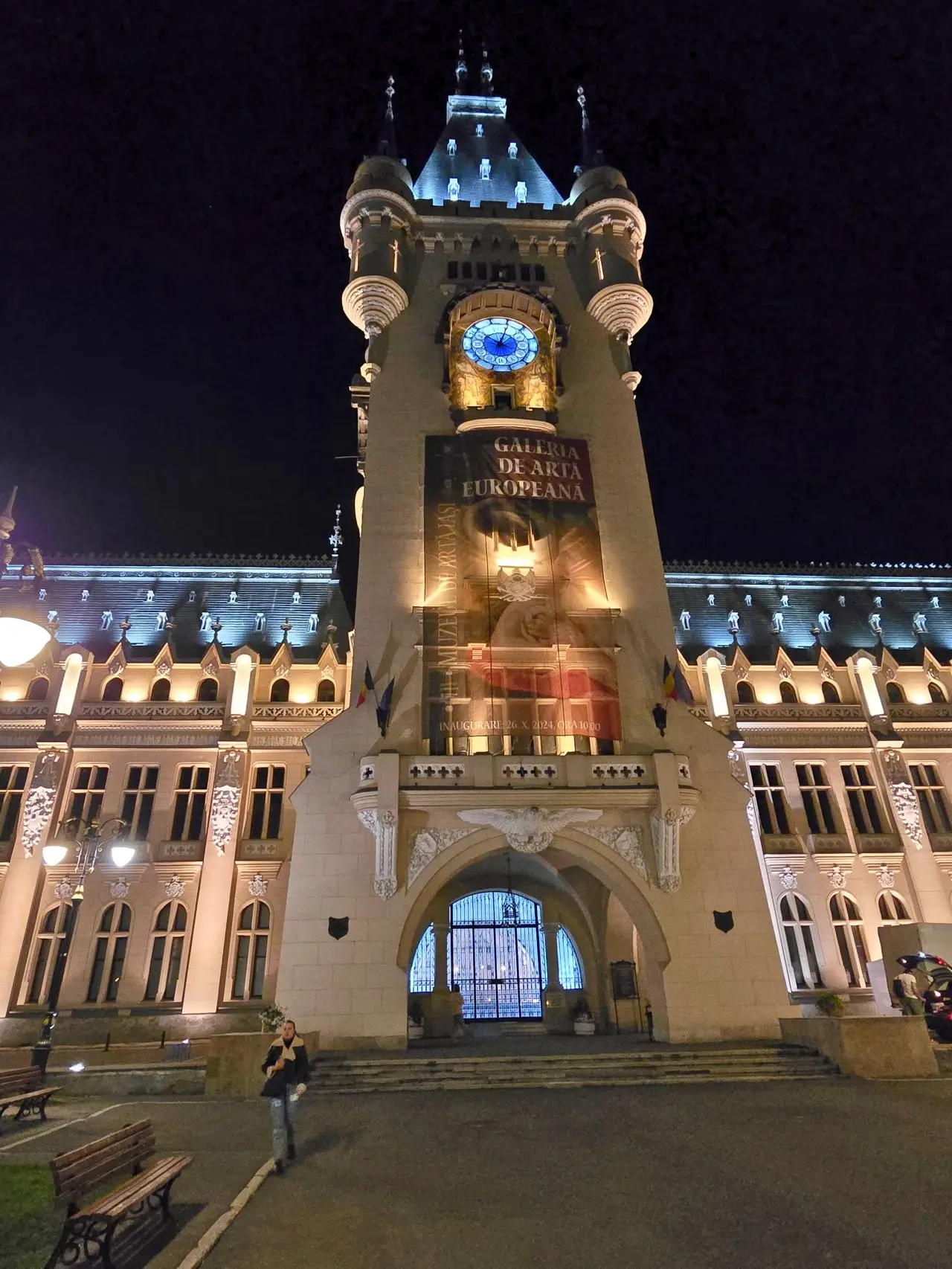
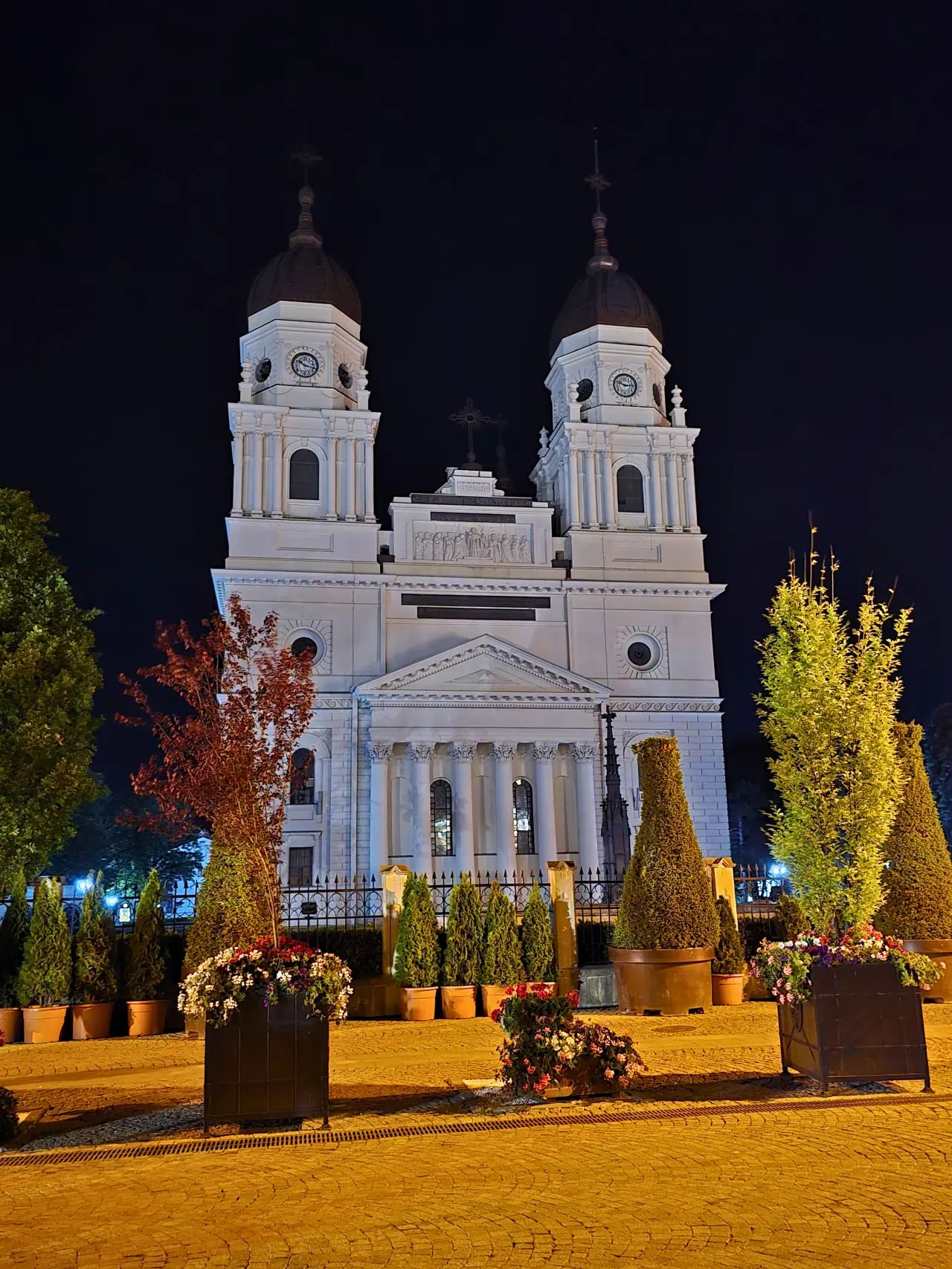
We ended the evening with engaging networking conversations and a city tour that showed us Iași's beautiful historic center and modern business districts. The contrast illustrated Romania's broader story: respecting history while building for the future.
Day Three: Crossing into Moldova
On May 16, our delegation crossed the border from Iași into the Republic of Moldova early in the morning. The bus journey itself was symbolic—we were moving from one EU member state into a country actively pursuing EU integration, a nation in the midst of economic transformation and modernization.
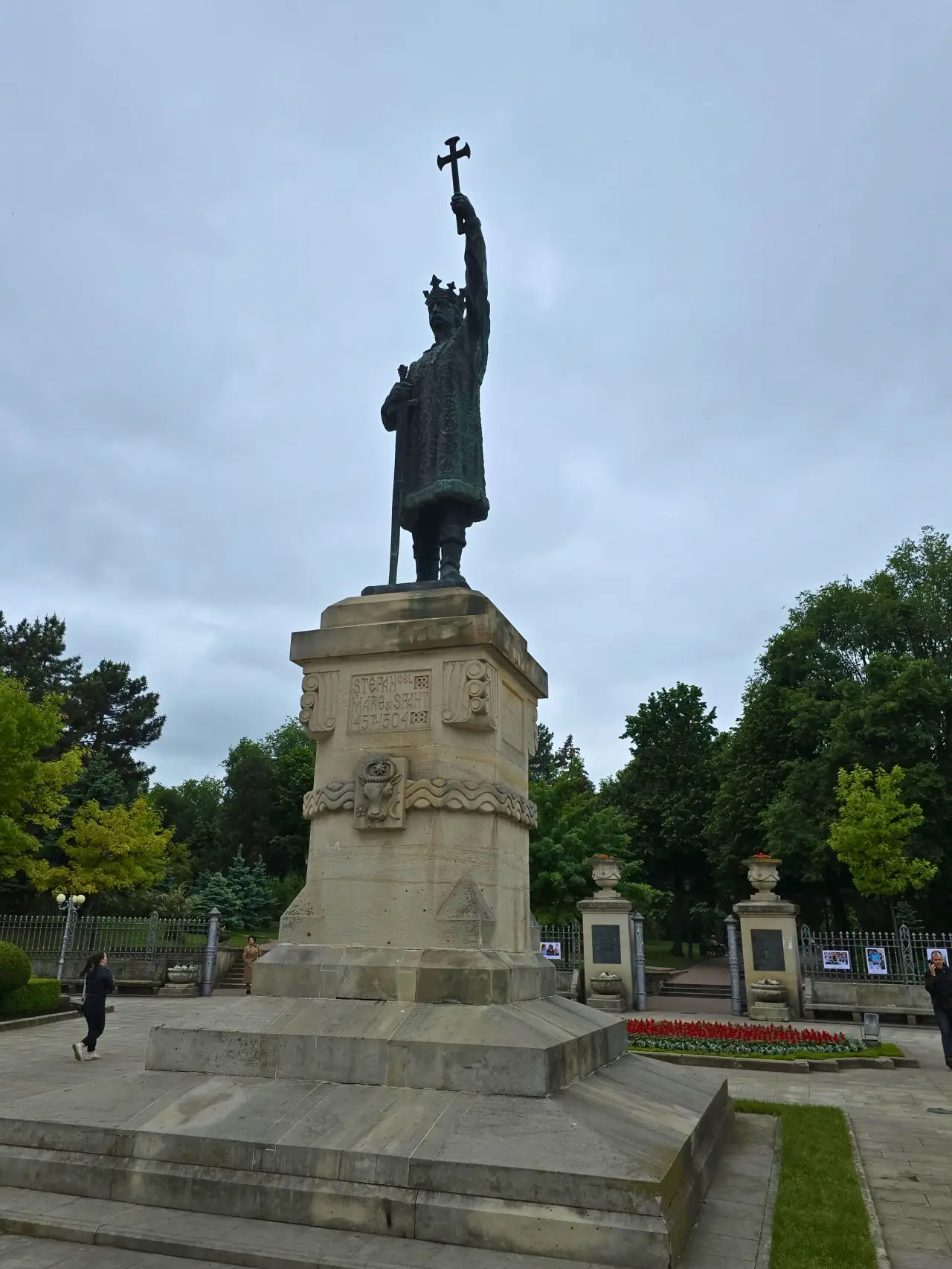
Arriving in Chișinău, Moldova's capital, we were immediately struck by the energy and ambition. This wasn't the former Soviet republic many might imagine—it was a country moving forward with clear purpose and strategic direction.
Welcome to Moldova: Political and Economic Briefing
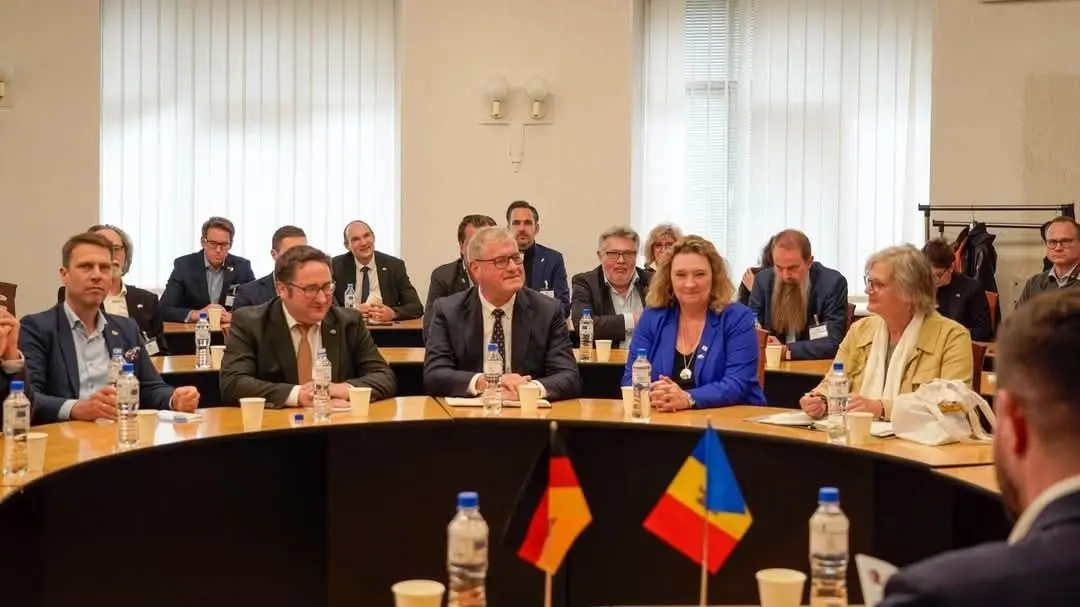
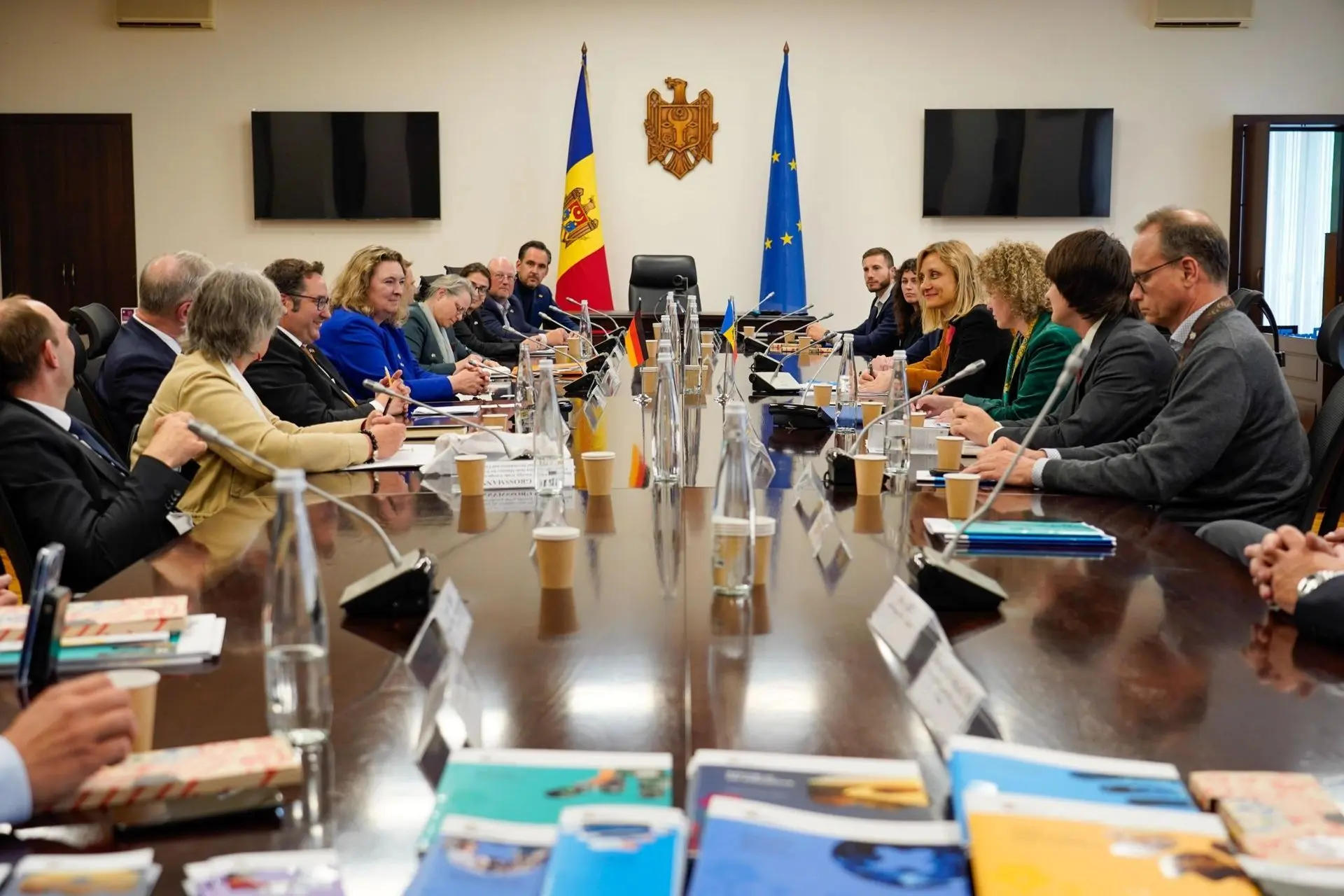
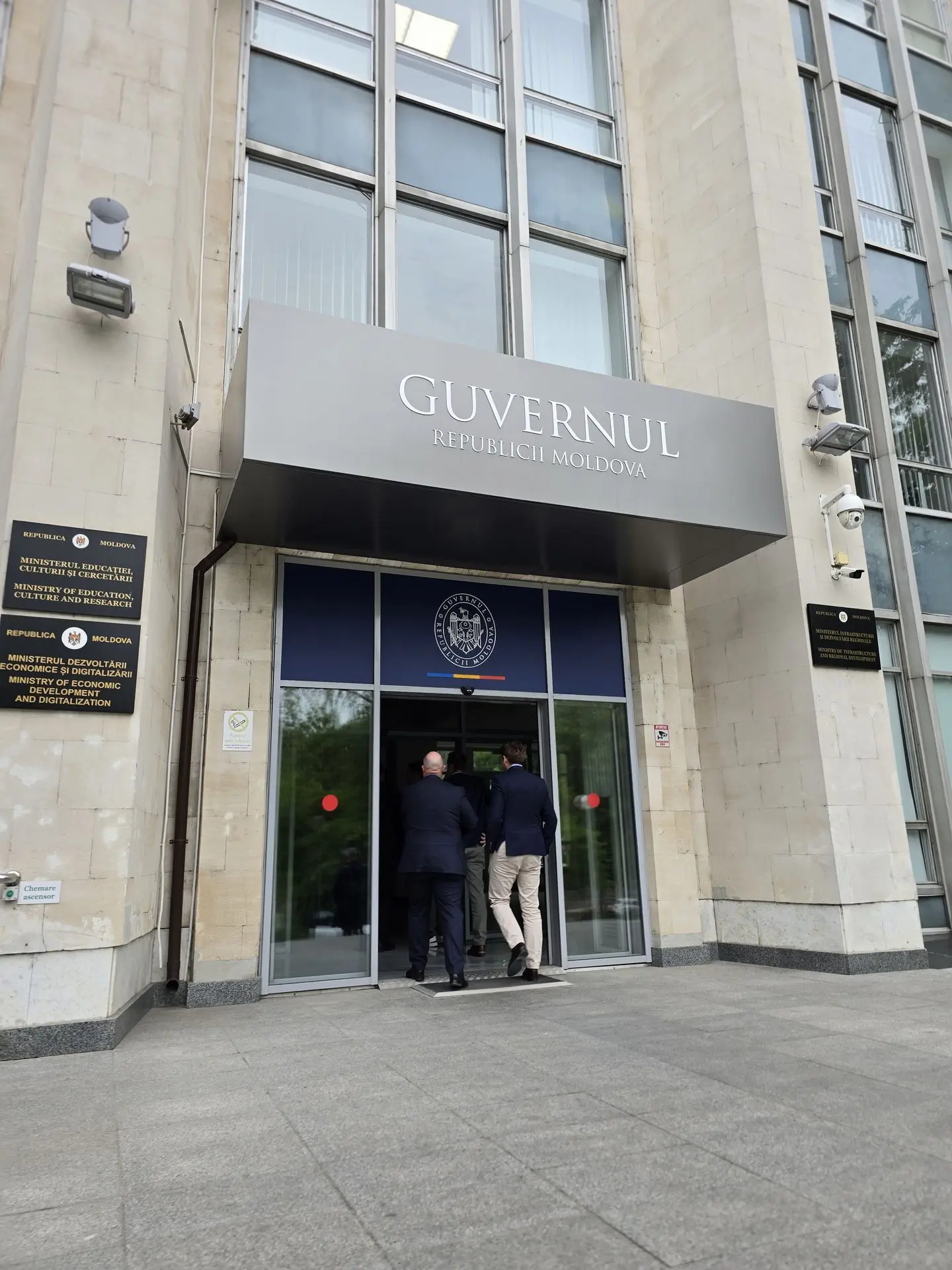
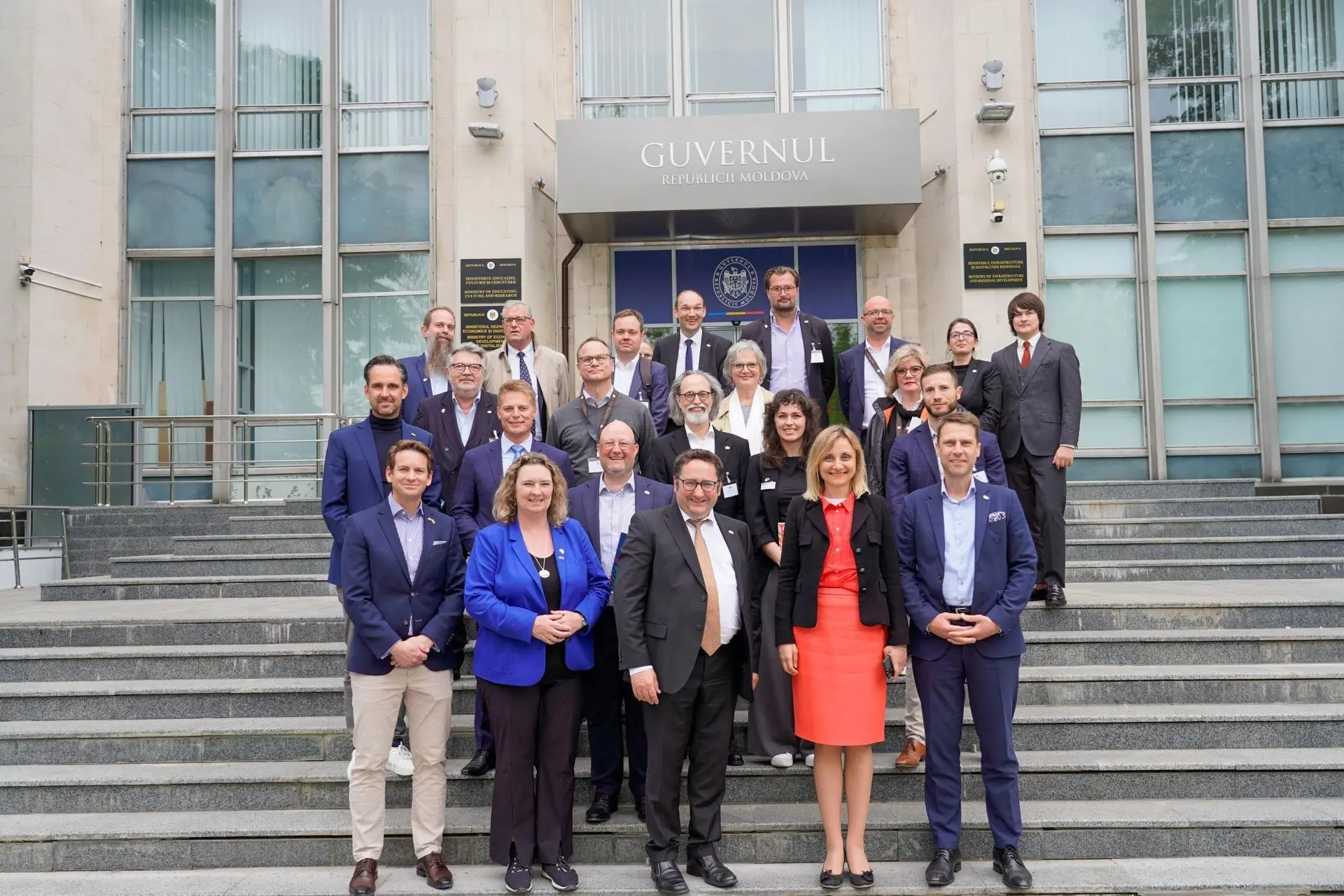
Our first official engagement was a comprehensive briefing by Her Excellency Margret Maria Uebber, German Ambassador to Moldova. Her insights set the tone for understanding Moldova's current position and future trajectory.
State Secretary Tobias Gotthardt and Sebastian Metz, CEO of AHK Romania (also responsible for Moldova), joined the session to share their perspectives on the growing partnership between Bavaria and Moldova, particularly in energy, digitalization, and economic development.
Moldova's Economic Transformation
The numbers tell an impressive story of Moldova's recent progress. The European Commission raised Moldova's GDP growth forecast for 2025 from 0.9% to 1.6%, with economic activity picking up in the first half of 2025 supported by strong growth in private investment.
Moldova's GDP increased by 1.1% year-over-year in Q2 2025, driven by sectors like construction (+7.2% y/y) and utilities (+20% y/y), after exiting a three-quarter recession. More importantly, gross fixed capital formation surged by 26% year-over-year, driven by investments in both construction and production equipment with growth rates above 20% in both segments.
Looking ahead, Moldova's annual GDP growth could accelerate to 5.3% by 2028 if the reform program supported by EU funding of 1.9 billion euros is successfully implemented. This isn't just optimistic forecasting—it's based on concrete reform programs and committed funding.
DRÄXLMAIER Design Center: Academic-Industrial Collaboration
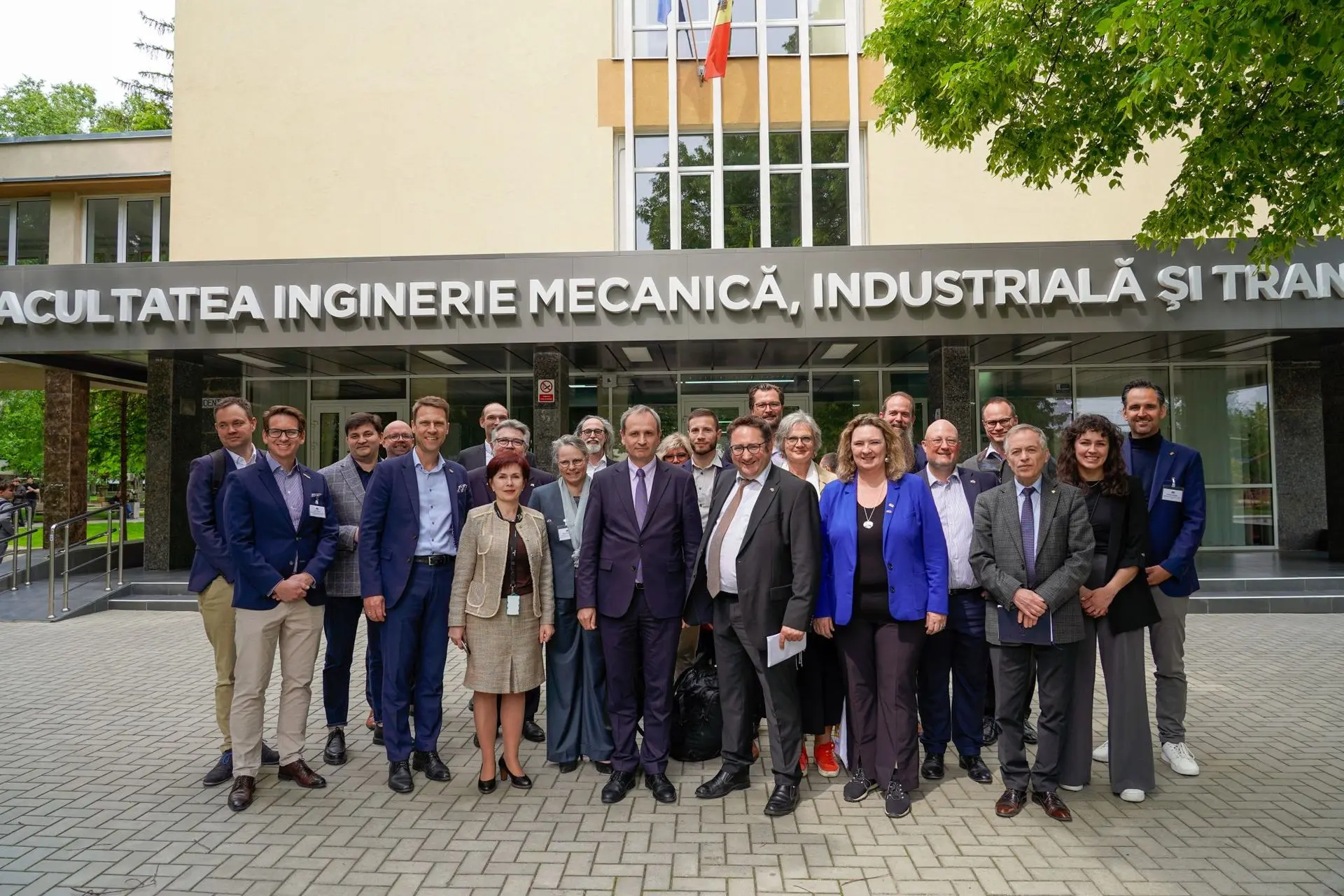
After lunch, we visited the DRÄXLMAIER Design Center, developed in partnership with the Technical University of Moldova. This visit was particularly insightful for understanding how global companies are integrating Moldova into their value chains.
DRÄXLMAIER, a major automotive supplier, hasn't just established a production facility—they've created a design and innovation center that leverages Moldova's engineering talent. The collaboration with the Technical University demonstrates how academic and industrial partnerships are shaping Moldova's role in the global supply chain.
What stood out was the quality of work being produced here. This wasn't low-cost assembly—it was genuine engineering and design work that contributes real value to DRÄXLMAIER's global operations.
Ministry of Energy: Moldova's Energy Independence Strategy
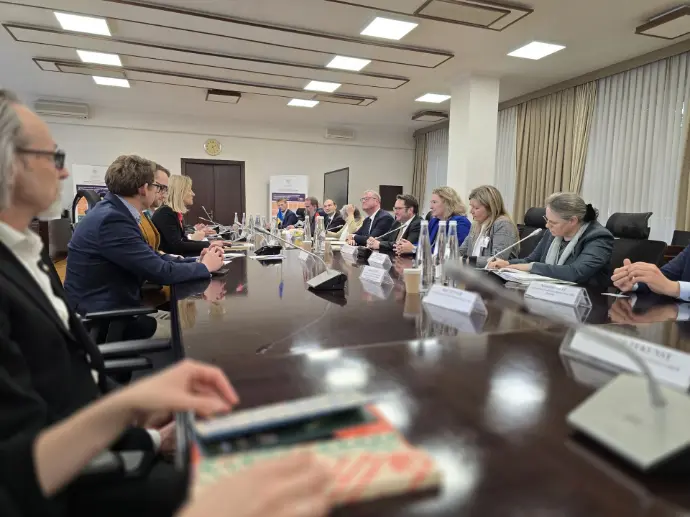
Our meeting with Minister Dorin Junghietu at the Ministry of Energy was one of the most important discussions of the trip. Energy security has been Moldova's most critical challenge, especially since the energy crisis that began following the end of the transit agreement for Russian gas on January 1, 2025.
The Energy Challenge and Response
Minister Junghietu provided a detailed overview of Moldova's energy landscape, future plans, and strategic relationship with Germany and Bavaria. The discussion covered sustainability, energy independence, and technological modernization.
Moldova's situation is unique. The country no longer depends on Russian energy, having successfully navigated the crisis through diversification and European support. Energy compensation payments that began in the first quarter of 2025 helped mitigate the impact of rising energy prices on private consumption.
For companies like G&E Sales, Moldova's energy transformation represents significant opportunities. The country needs:
- Renewable energy projects and infrastructure
- Grid modernization and smart energy management systems
- Energy-efficient building technologies
- Training and capacity building in sustainable energy
Germany and Bavaria, with their expertise in renewable energy and energy efficiency, are natural partners for Moldova's transformation.
Ministry of Economy, Digitalization and Technology: Moldova's Digital Future
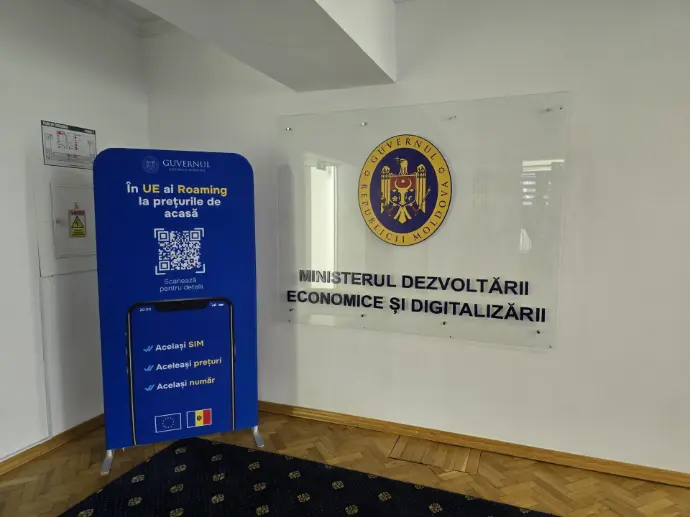
Our meeting with Minister Doina Nistor at the Ministry of Economy, Digitalization and Technology revealed another dimension of Moldova's development strategy.
Aligning with European Standards
Minister Nistor briefed us on the Moldovan economy, its alignment with European standards, and efforts to strengthen economic ties with Germany. Under Moldovan law, foreign companies enjoy national treatment in most respects, and the government views FDI as vital for fueling sustainable economic growth and poverty reduction.
The government has initiatives underway to transform Moldova into a top destination for investments and startups by reducing bureaucracy, eliminating corruption, and digitizing public services by 2027.
Moldova's Digital Transformation Success
Moldova's progress in digital transformation is remarkable. Moldova is a regional leader in digital transformation, with 40 percent of its public services now online, thanks in part to strategic government policies.
The country's openness to foreign partnerships and focus on digitalization creates opportunities for businesses in:
- Digital infrastructure development
- E-government solutions
- Fintech and digital payment systems
- Automation and smart manufacturing technologies
Networking Evening: Building Business Relationships
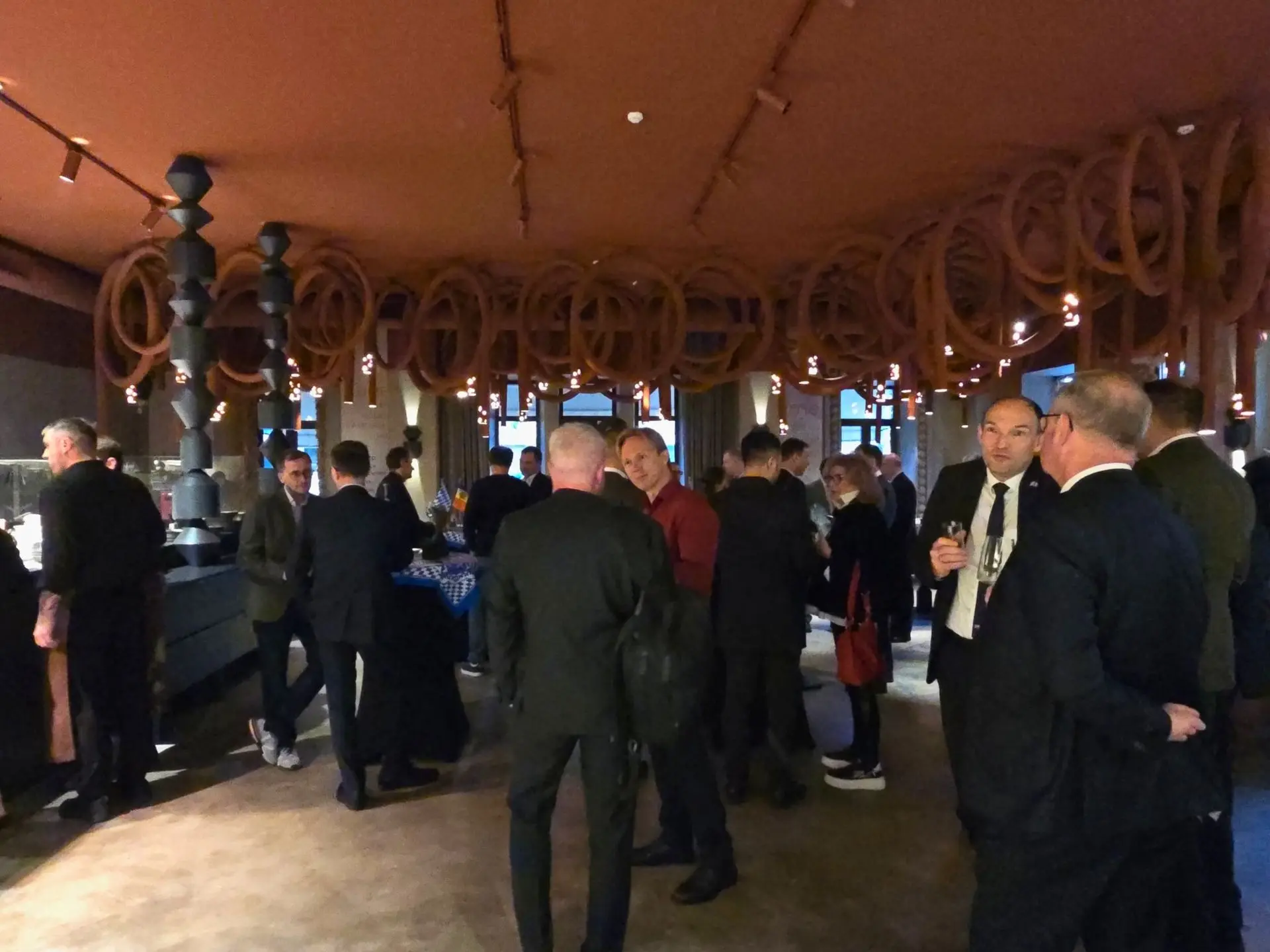
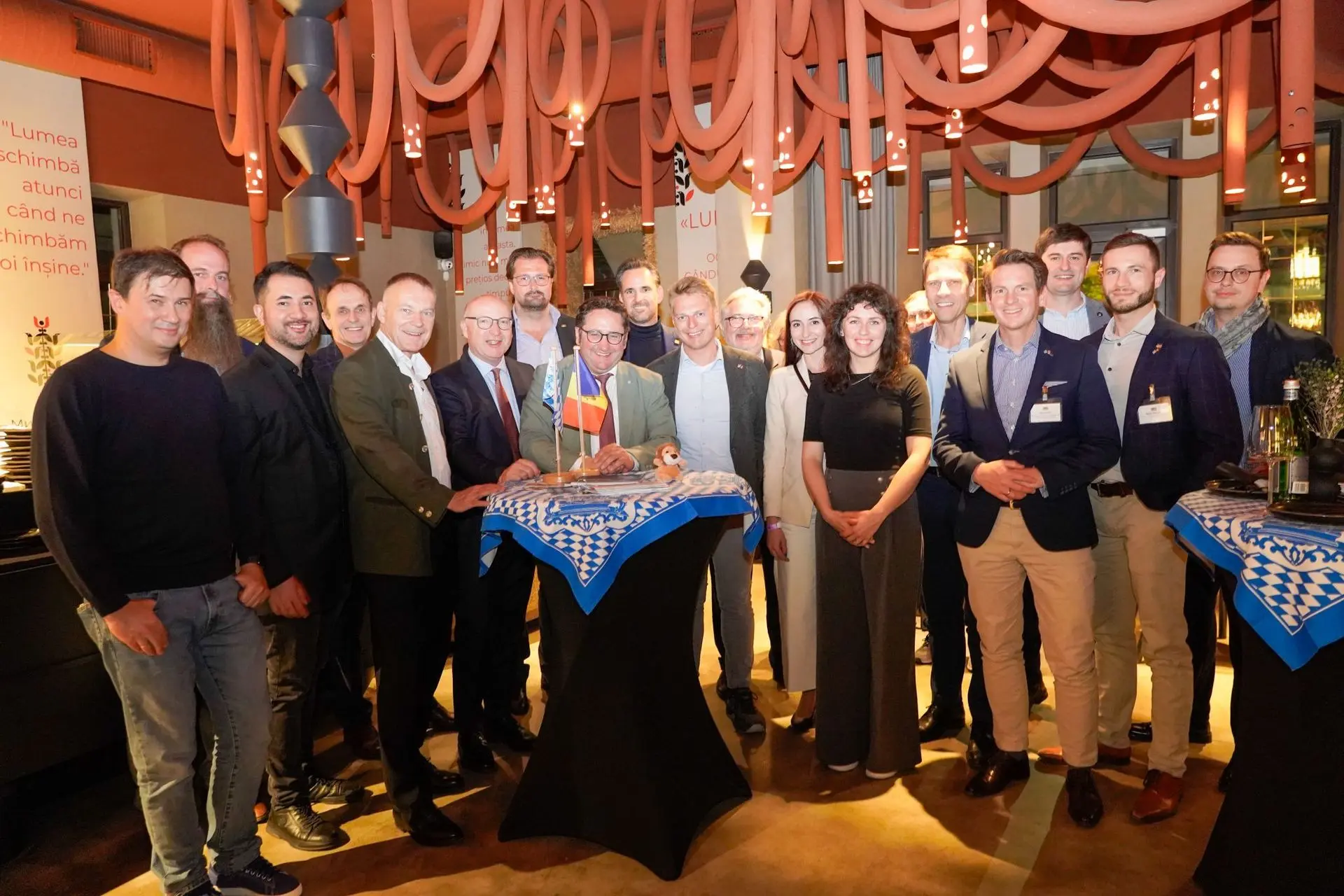
The evening networking event with local companies and organizations was invaluable for understanding the Moldovan business landscape from the ground level. We met entrepreneurs, business leaders, and representatives from various sectors, all eager to strengthen ties between Bavaria and Moldova.
The conversations revealed several key themes:
Industry 4.0 Readiness: Moldovan companies are actively implementing automation and smart manufacturing solutions. They're not waiting to catch up—they're investing in cutting-edge technologies now.
Skilled Workforce: The quality of Moldova's technical workforce came up repeatedly. Companies praised the engineering and IT talent available in Moldova.
Partnership Opportunities: There's strong interest in partnerships with German companies, particularly in technology transfer, training, and joint ventures.
Openness to Innovation: Moldovan businesses showed remarkable openness to new ideas, technologies, and ways of doing business.
These discussions opened doors for potential future collaborations in sustainable construction, renewable energy, and technical training—all areas where G&E Sales could add value.
Tekwill Startup Hub: Moldova's Innovation Ecosystem
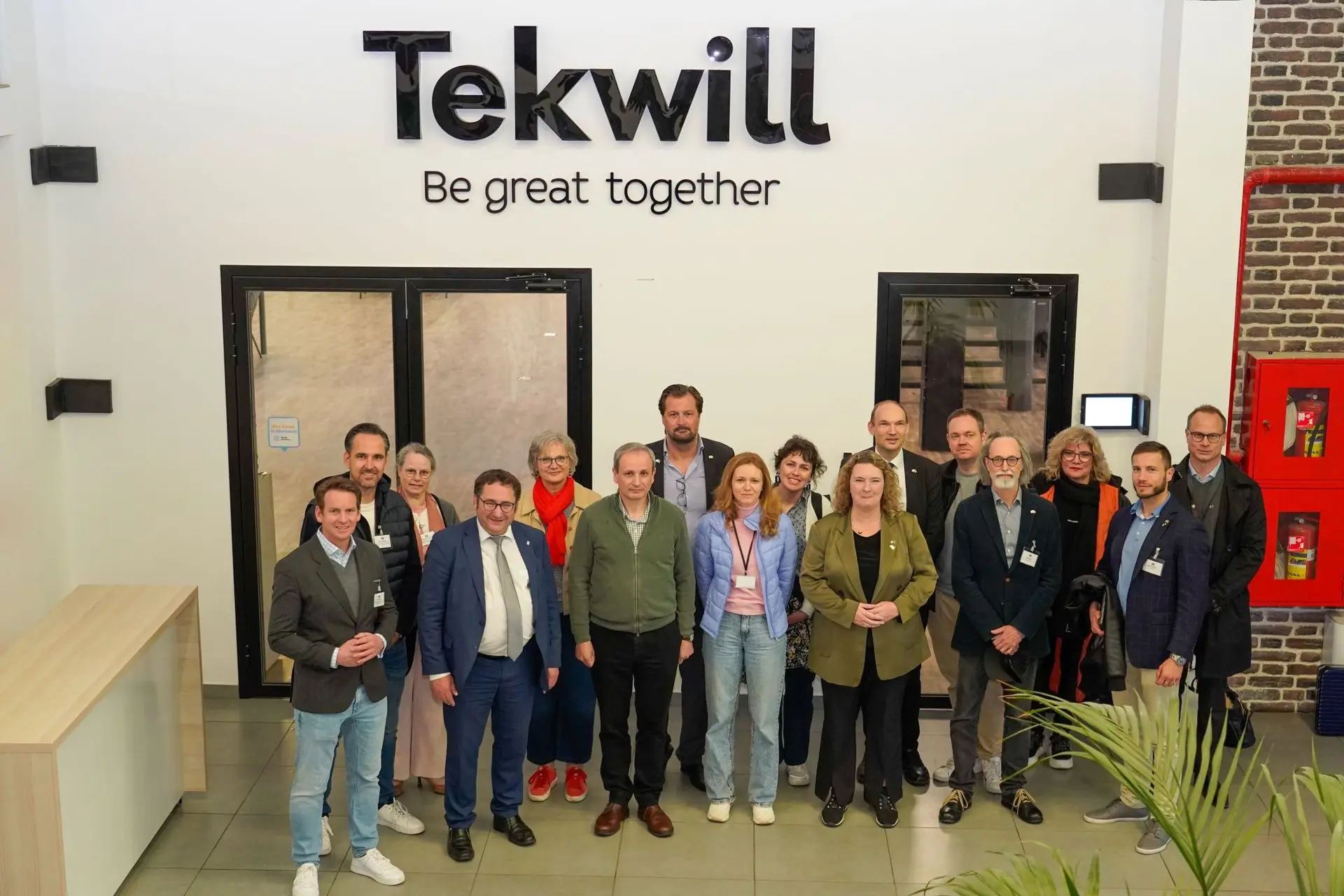
On our final day, we visited Tekwill, Moldova's flagship startup hub. Located within the Technical University of Moldova, Tekwill is a 4,000 square meter innovation center that provides everything entrepreneurs need to build and scale their businesses.
What Makes Tekwill Special
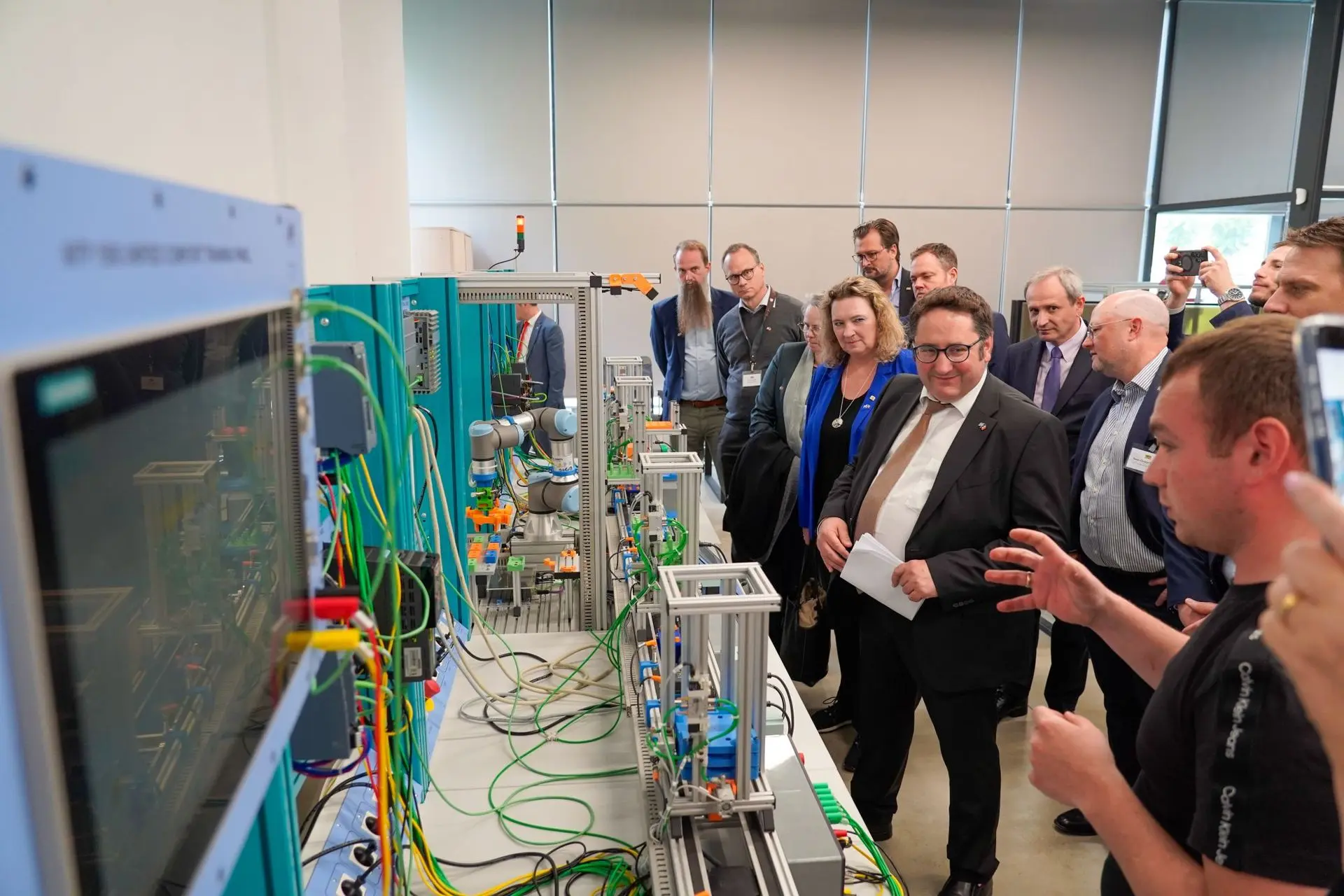
Tekwill provides world-class education and training facilities with up-to-date curricula, lecturers and laboratories, creates linkages between ICT and non-ICT businesses, and provides support to projects and startups in assessing the global market.
The hub offers:
- Co-working spaces and meeting rooms
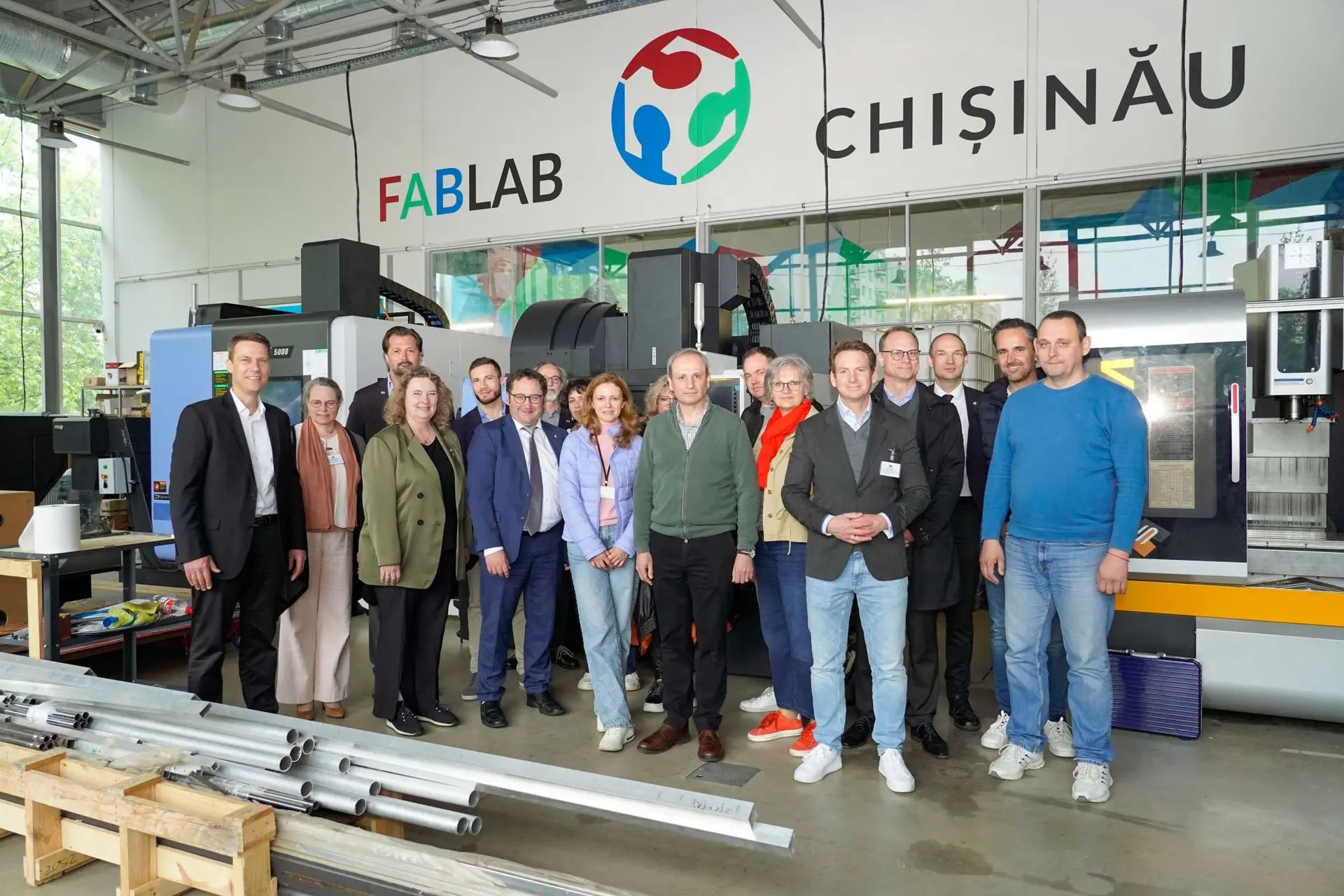
- Tech labs (IoT, 3D printing, fabrication facilities)
- Mentoring and business support programs
- Networking events and connections to investors
- Educational programs and entrepreneurship training
During five years of operation, Tekwill completed or supported 878 educational initiatives and 499 entrepreneurship initiatives, helping over 472 teams reach better business, create opportunities, and seek investment.
Moldova's Thriving Tech Ecosystem
What impressed us most was the quality and ambition of the startups we met. These weren't just local businesses—they were companies with global aspirations, developing products and services for international markets.
According to Deputy Prime Minister Doina Nistor, tech contributes to 7 percent of Moldova's GDP, more than 11 percent of its national exports, and recorded the highest growth rate in Eastern Europe in recent years.
The Moldova Innovation Technology Park (MITP), with its unique 7% single tax regime for IT businesses, has attracted over 2,260 companies and employs more than 24,200 people. MITP contributes an impressive 5% to Moldova's national GDP in 2024, demonstrating the sector's impact on the economy.
For businesses considering Moldova, the tech talent pool is exceptional. A large number of students graduate annually with degrees in computing or related fields, and most Moldovan IT specialists speak at least one foreign language in addition to Romanian and Russian.
Milestii Mici: Wine, Culture, and Closing Reflections
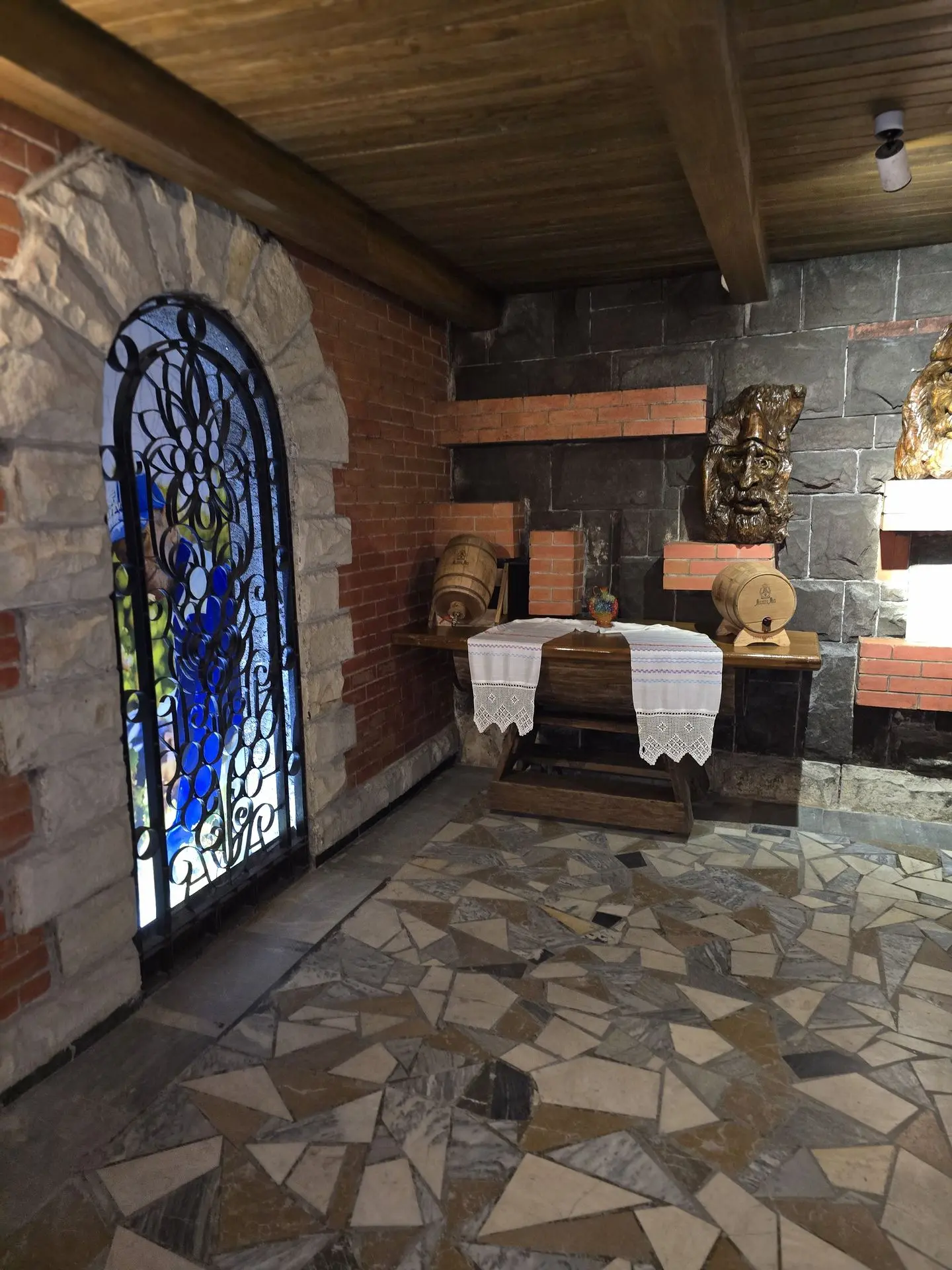
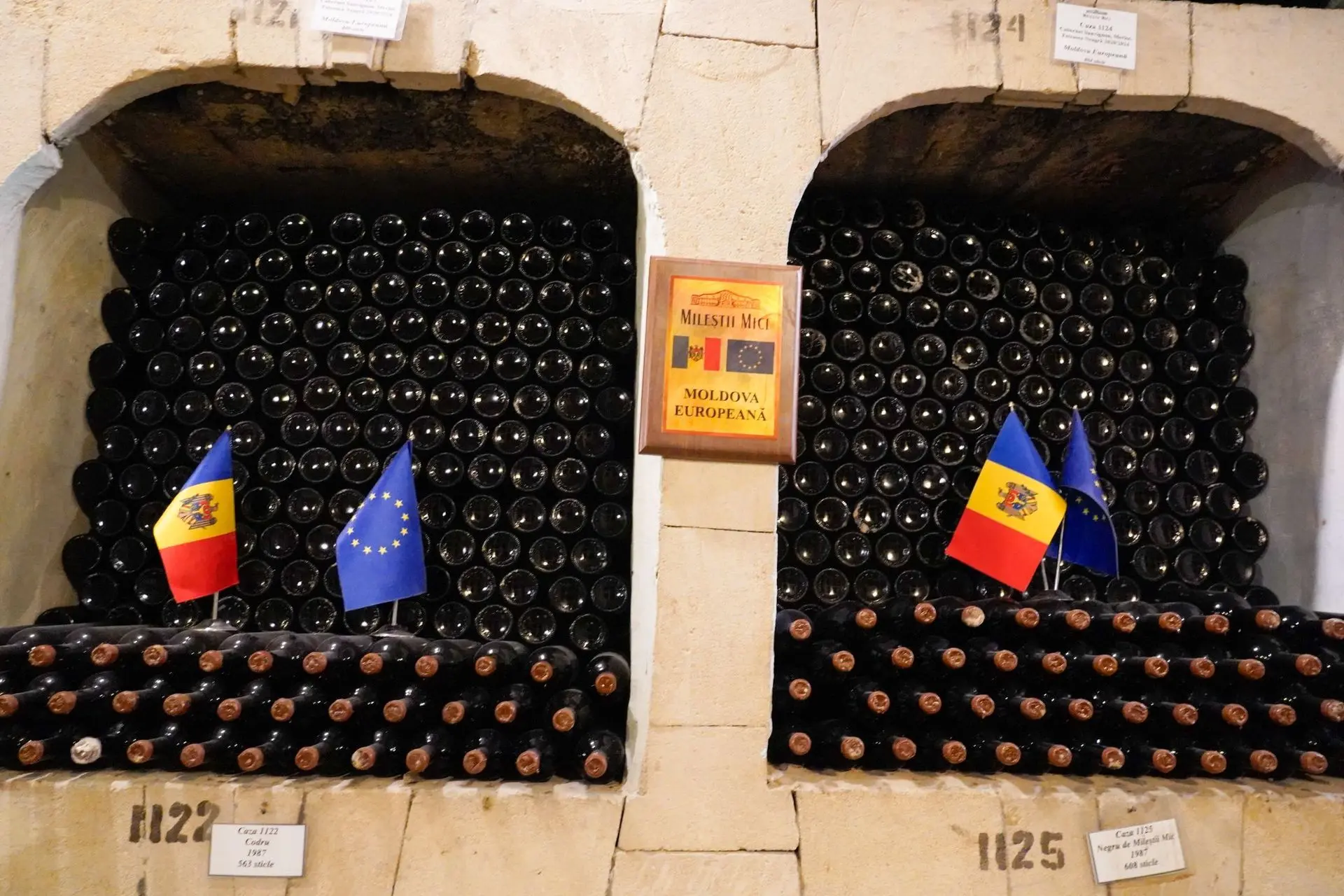
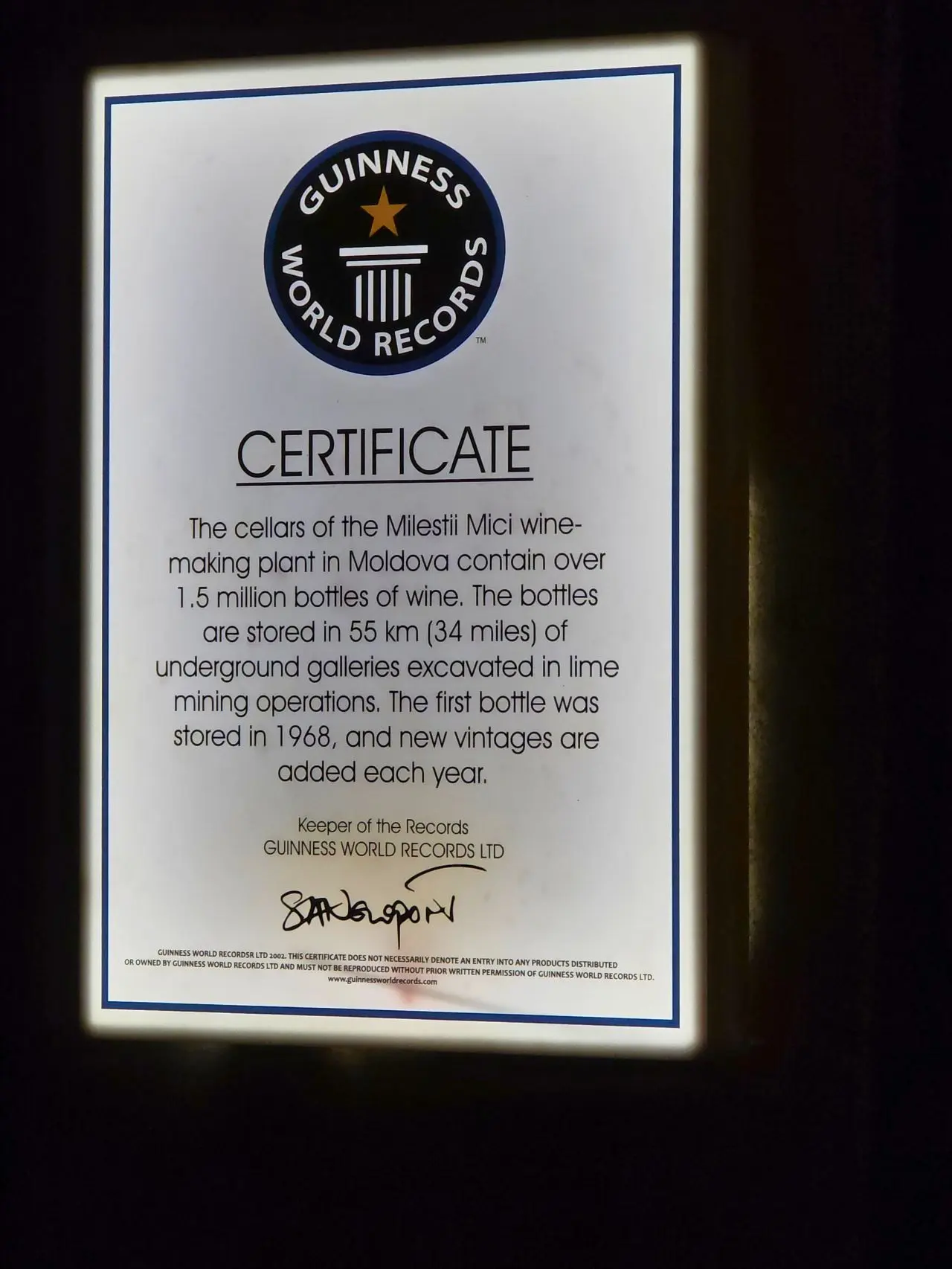
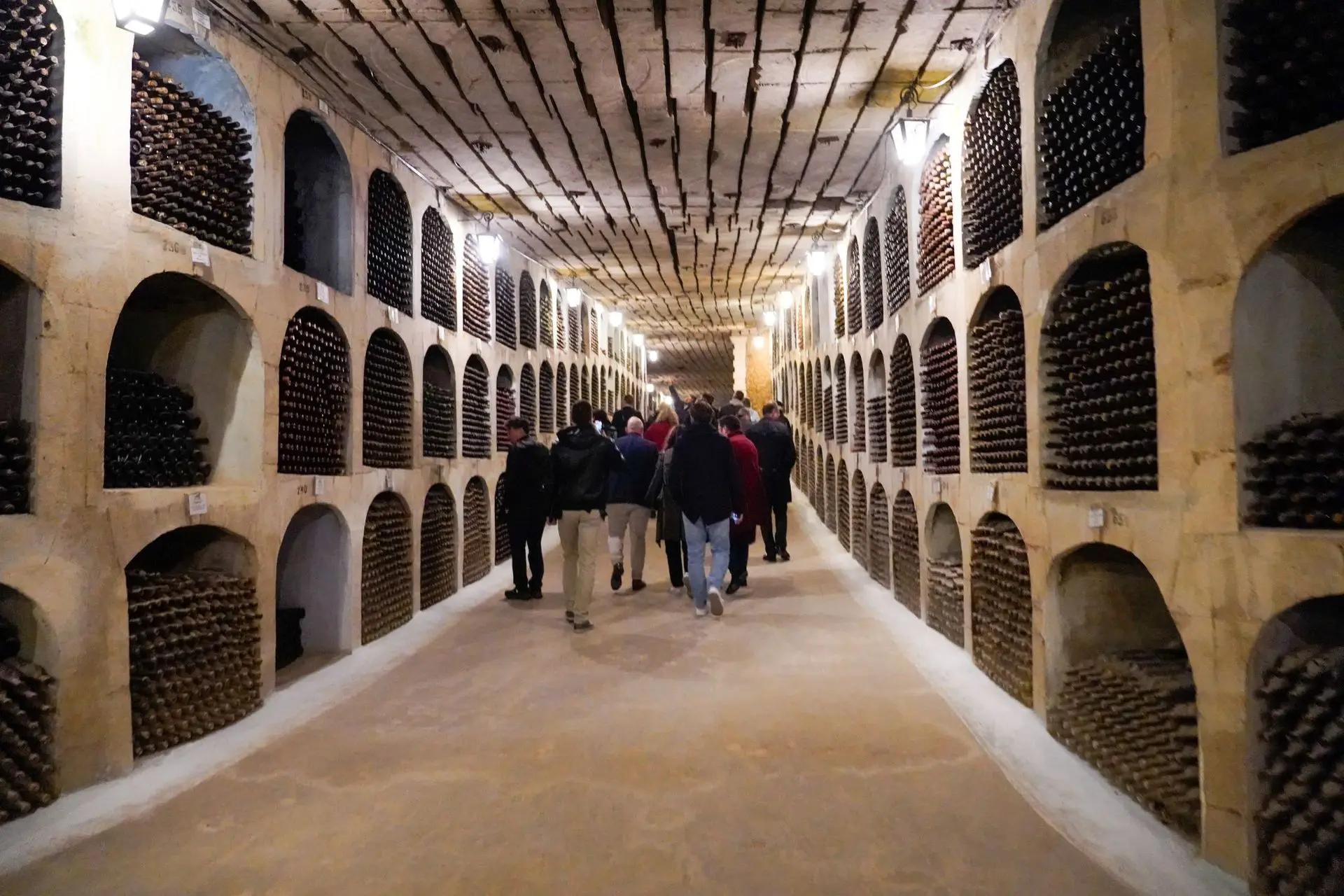
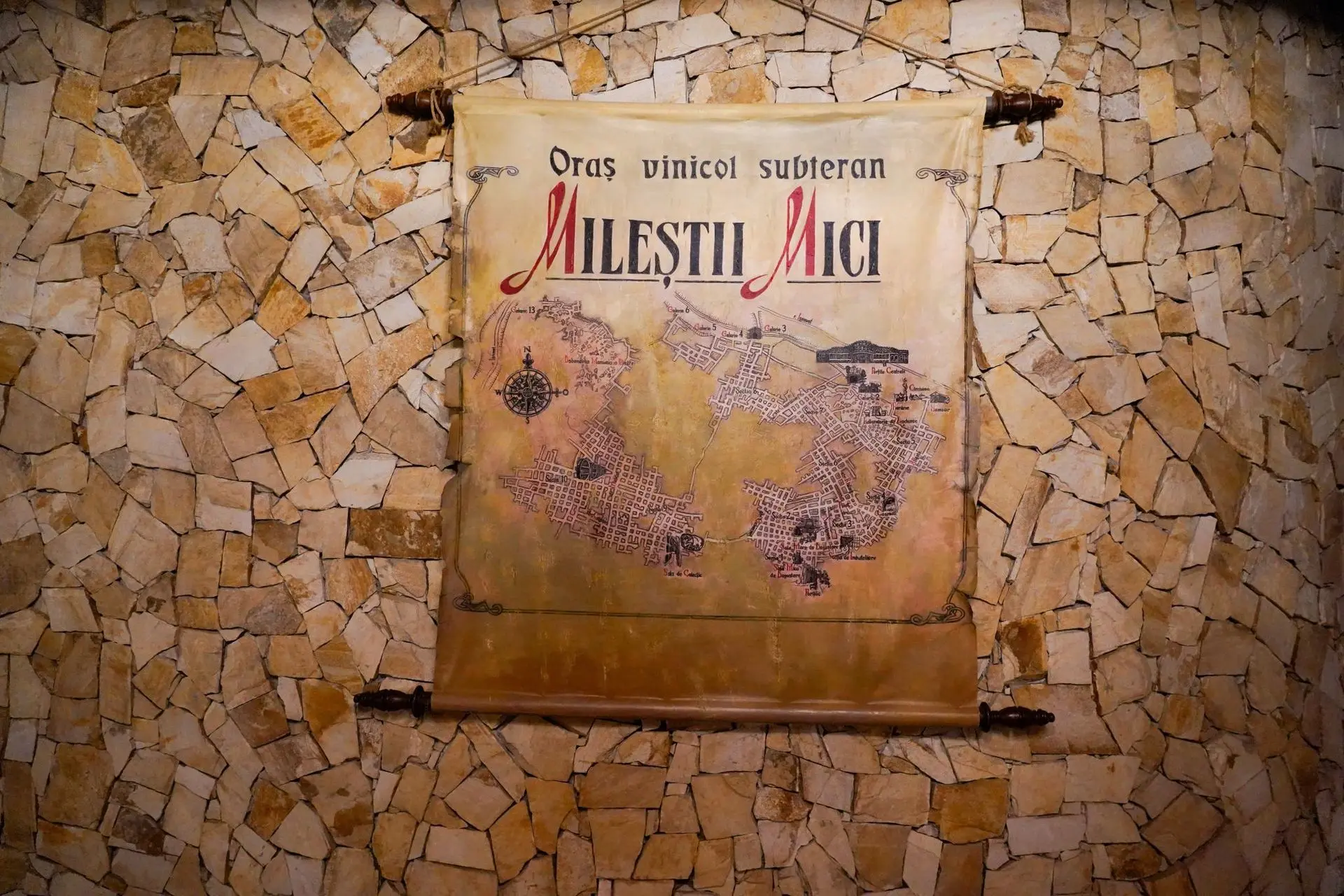
To wrap up our delegation trip, we visited Milestii Mici, home to the world's largest wine cellar with over 1.5 million bottles stored in its vast underground galleries. Individuals and global brands like Mastercard store their wine collections in these historic cellars.
The visit wasn't just about wine tasting (though that was enjoyable). It represented Moldova's unique cultural assets and its potential in sectors beyond tech and manufacturing. Moldova's wine industry is world-class, combining centuries of tradition with modern production techniques.
During the wine tasting, we held a final feedback session on the full delegation trip to Romania and Moldova. The consensus was clear: both countries offer significant opportunities for Bavarian and German businesses, particularly in sectors requiring innovation, technical expertise, and sustainable solutions.
Understanding the Romanian Market: Key Insights
Our time in Bucharest and Iași provided essential context for understanding Romania's market opportunities:
Romania, as an EU member since 2007, offers a more established market with developed infrastructure and full European integration. More than 417,000 square meters of industrial space were leased in the first half of 2025 in Romania, marking an over 20% increase compared to the same period in 2024.
In 2025, 44% of surveyed executives plan to expand or establish operations in Romania, showing continued confidence in the market despite global economic challenges.
Romania serves as a bridge between Western European markets and emerging Eastern European economies like Moldova. Many companies use Romania as their regional hub while exploring opportunities in Moldova, creating a natural progression for market entry.
What Makes Moldova Special: Key Market Advantages
Based on our observations and meetings, several factors make Moldova an attractive destination for business expansion:
1. Strategic Location and Market Access
Moldova sits at the crossroads between EU markets and Eastern markets, offering strategic access to both. Moldova now exports over 80 percent of its goods to European, North American, and other non-Russian markets.
2. Favorable Business Environment
Moldova signed an Association Agreement with the European Union in June 2014, including a Deep and Comprehensive Free Trade Agreement (DCFTA), committing the government to bring its practices in line with EU standards. EU accession negotiations were officially launched on June 25, 2024.
The Moldova Innovation Technology Park offers a competitive 7% single tax regime that will remain in effect until 2035, making it one of Europe's most attractive tax environments for tech companies.
3. Skilled, Multilingual Workforce
Moldova offers high-quality technical talent at competitive costs. The education system produces thousands of engineering and IT graduates annually, and the workforce is multilingual, typically speaking Romanian, Russian, and English.
4.4% of Moldova's workforce is employed in the ICT sector—the second-highest ratio in emerging Europe after Estonia.
4. Government Support and Reform Commitment
The Moldovan government actively supports foreign investment. The EU approved a 1.9 billion euro Reform and Growth Facility for Moldova, providing up to 385 million euros in grants and 1.5 billion euros in long-term, low-interest loans for 2025-2027.
Moldovan authorities anticipate that alongside EU funding, the implementation of reforms could attract around 2.5 billion euros in private investment into Moldova's economy between 2025 and 2027.
5. Rapid Digital Transformation
Moldova is moving faster than many established markets in digitalization. The combination of modern digital infrastructure, tech-savvy population, and government commitment to e-governance creates opportunities for digital solutions across sectors.
6. Energy Sector Opportunities
Moldova's energy independence strategy requires significant investment in renewable energy, grid modernization, and energy efficiency. For companies specializing in sustainable energy solutions, this represents a market with immediate demand and long-term growth potential.
What Makes Romania Special: Complementary Strengths
Romania offers different but complementary advantages to Moldova:
EU Membership and Market Size
As a full EU member, Romania provides regulatory certainty and access to European markets without additional barriers. With a population of nearly 20 million, Romania also offers a substantial domestic market.
Established Manufacturing Base
Romania has a well-developed manufacturing sector, particularly in automotive, machinery, and electronics. The supply chain infrastructure and industrial expertise make it attractive for production operations.
Strategic Nearshoring Destination
Romania is rapidly emerging as a premier destination for industrial and logistics investments, poised to become a major European hub within the next decade, driven by strategic reconfigurations and a strong nearshoring trend.
Romania has the second-lowest labor costs in the EU while offering skilled workforce and modern infrastructure—a combination that's attracting significant foreign investment.
Innovation and Tech Talent
Like Moldova, Romania has a strong IT sector with world-class talent. Major tech companies including Microsoft, Amazon, and Oracle have substantial operations in Romania, validating the quality of the workforce.
Opportunities for G&E Sales and Partner Companies
This delegation trip confirmed significant opportunities for G&E Sales in both Romania and Moldova:
1. Sustainable Construction Solutions
Both countries are experiencing construction booms but need modern, energy-efficient building solutions.
Moldova's construction sector grew 7.2% year-over-year in Q2 2025, while Romania continues expanding its industrial and commercial real estate. Both markets prioritize sustainability and energy efficiency.
2. Renewable Energy Projects
Moldova's energy independence strategy and Romania's renewable energy targets create demand for solar, wind, and energy efficiency projects. G&E Sales' experience in renewable energy solutions positions us well for these markets.
3. Automation and Robotics Partnerships
Our partnership with Easy Automator found genuine interest in both Romania and Moldova. Companies are actively implementing Industry 4.0 solutions and need accessible, innovative robot-teaching technologies that make automation achievable for companies of all sizes.
4. Training and Capacity Building
Both countries need training programs to transfer specialized skills and knowledge. Our experience in engineering training programs could help companies meet local content requirements while building local capacity.
5. Technology Transfer and Partnerships
The openness to German expertise and technology creates partnership opportunities. Companies in both markets are eager to work with German businesses to access advanced technologies and know-how.
6. Long-term Market Presence
Unlike markets focused on quick transactions, both Romania and Moldova value long-term partnerships. This aligns perfectly with G&E Sales' approach of building lasting relationships rather than pursuing one-off deals.
Ready to Expand to Romania or Moldova?
At G&E Sales, we specialize in helping companies navigate international market entry, particularly in emerging European markets.
Our experience in multiple markets gives us unique insights into what works and what doesn't. If you are interested in expanding into one or both of these countries, reach out at info@geglobalsales.com.





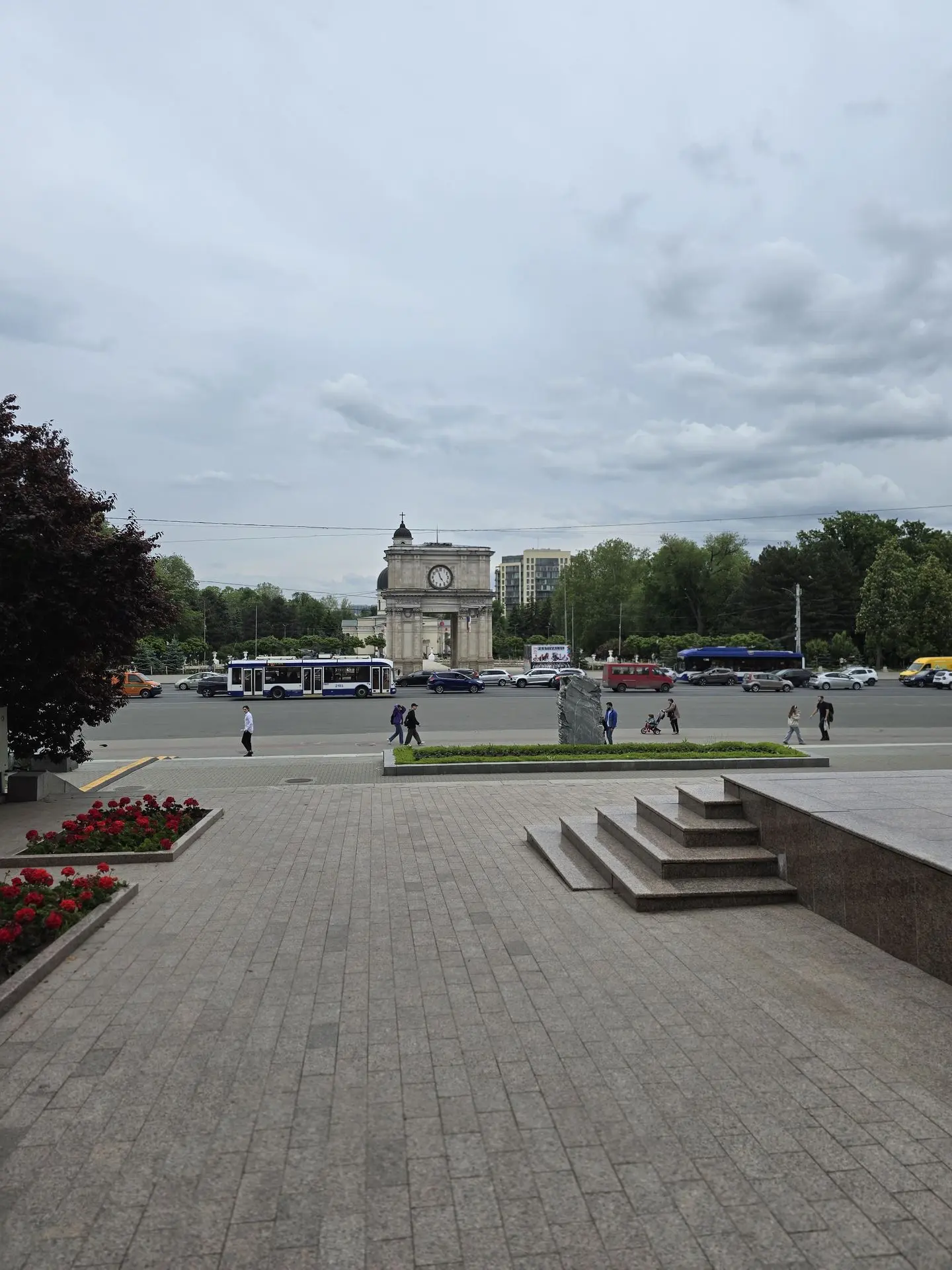

Bavarian Business Delegation to Romania and Moldova: Exploring Emerging Market Opportunities